
Finding Stars Near Phoenix: Top Observing Spots
Stargazing around Phoenix requires a bit of planning. To see the Milky Way or faint meteor showers, you have to escape the city's luminous footprint. We've compiled the ultimate list of dark sky escapes in the area.
DH Research Lab
Data & Editorial Board
Expert Tested Gear & Affiliate Disclosure
This guide contains affiliate links. As an Amazon Associate, we earn from qualifying purchases.
01Understanding Local Light Pollution
Before heading out from Phoenix, always check the Bortle scale of your destination. The transition from the inner city (Bortle 8/9) to these locations represents a massive leap in visibility.
02Why Arizona is Special for Stargazing
Arizona isn't just good for stargazing—it's exceptional. Here's why:
Low Humidity: Desert air holds almost no moisture, meaning incredibly stable "seeing" conditions. Stars don't twinkle as much, revealing more detail.
High Elevation: Many sites are 5,000-7,000+ feet, putting you above denser atmosphere.
Dark Sky Leadership: Arizona has more International Dark Sky Parks, Communities, and Sanctuaries than any other state. Multiple observatories (Lowell, Kitt Peak, MMT) chose Arizona for good reason.
Clear Skies: Phoenix averages 299 sunny days per year. Even winter offers excellent conditions.
The Bortle Scale
031. Sedona (Dark Sky Community)
Distance from Phoenix: 2 hours | Bortle Class: 4 | Best For: Scenic stargazing, easy access
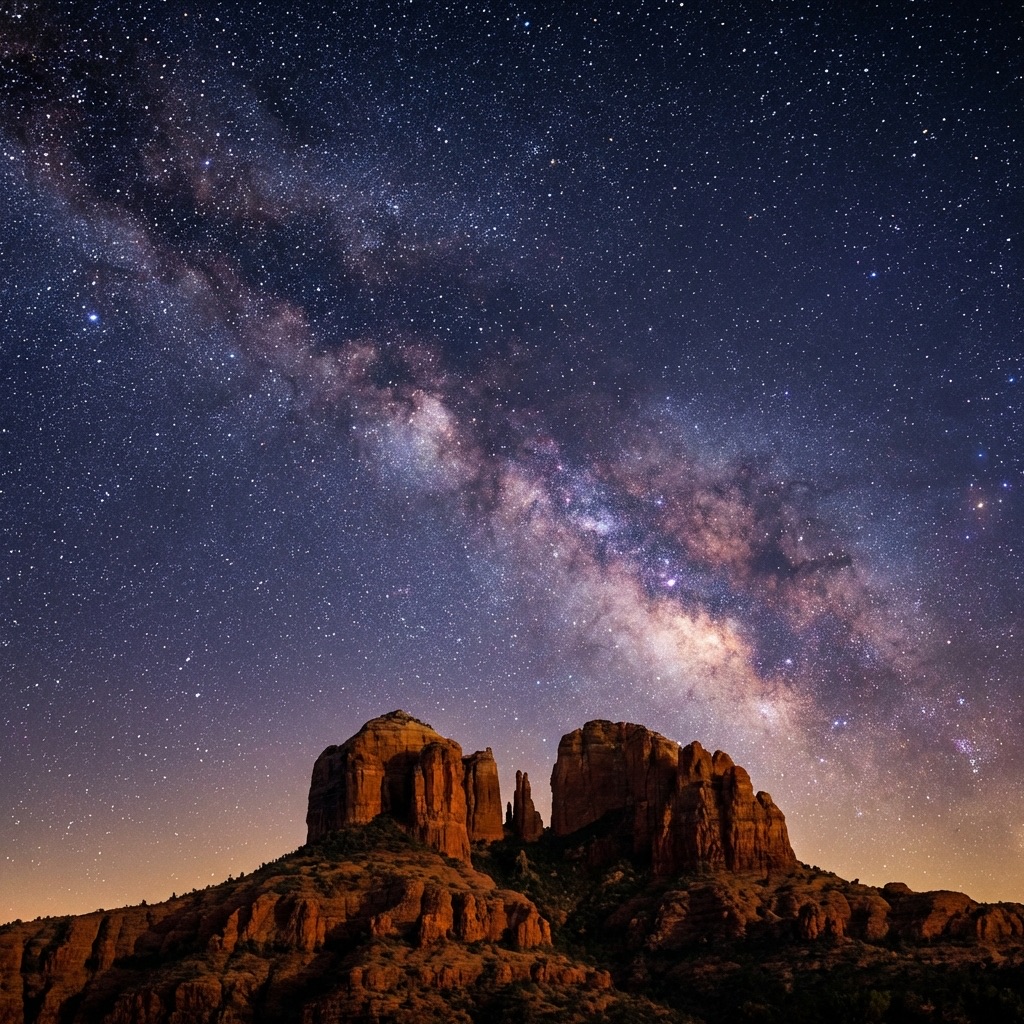
Sedona earned International Dark Sky Community status in 2014. The town itself has adopted dark-sky-friendly lighting, and the famous red rocks create unforgettable foregrounds for astrophotography.
Top Viewing Spots:
- Airport Mesa — Easy access, stunning 360° views
- Schnebly Hill Road — More secluded, iconic rock formations
- Red Rock Crossing — Cathedral Rock reflected in Oak Creek
Image Credit: The Milky Way rising over Cathedral Rock is one of the most photographed night sky scenes in America.
iOptron SkyGuider Pro
“Compact star tracker for Milky Way photography.”
RATIONALE
Sedona's red rocks + Milky Way is a bucket-list shot. A tracker lets you capture it with lower noise and longer exposures.
042. Flagstaff (World's First Dark Sky City)
Distance from Phoenix: 2.5 hours | Bortle Class: 3-4 | Best For: Astronomy history, Lowell Observatory
Flagstaff was designated the world's first International Dark Sky City in 2001. This is where Pluto was discovered at Lowell Observatory, and astronomy remains central to the town's identity.
Must-Do:
- Lowell Observatory — Public programs, historic telescopes, the Clark refractor
- U.S. Naval Observatory Flagstaff — Research facility, occasional public nights
- Sunset Crater — Volcanic cinder cone with exceptional skies
Practical: Flagstaff is at 7,000 feet. Summer nights are cool; winter nights are frigid. Dress accordingly.
Astronomy Heritage
Pluto was discovered here in 1930. The tradition continues.
Public Programs
Lowell Observatory offers nightly telescope viewing for visitors.
Elevation
At 7,000 feet, you're above significant atmosphere—sharper stars.
053. Grand Canyon National Park
Distance from Phoenix: 3.5-4 hours | Bortle Class: 2-3 | Best For: Bucket-list experience, extreme darkness
The Grand Canyon's night sky is as awe-inspiring as its daytime views. Designated an International Dark Sky Park, the canyon offers some of the darkest accessible skies in the American Southwest.
Viewing Locations:
- Mather Point — South Rim, easy access, park ranger programs
- Lipan Point — Less crowded, stunning eastern canyon views
- North Rim — Even darker, but closed in winter
Special Events: The park hosts an annual Star Party in June with telescopes set up along the rim.
Celestron 20x80 SkyMaster Pro Binoculars
“Large-aperture binoculars that rival small telescopes.”
RATIONALE
At the Grand Canyon, you want to soak in wide views, not fiddle with equipment. These binos reveal incredible detail in the Milky Way.
064. Kartchner Caverns State Park
Distance from Phoenix: 2.5 hours | Bortle Class: 3 | Best For: Combining cave tours with stargazing
Kartchner Caverns is famous for its living cave systems, but it's also an underrated dark sky destination. The park hosts regular astronomy programs and the skies are genuinely dark.
Why Visit:
- Combine daytime cave tour with evening stargazing
- Park rangers set up telescopes for guests
- Campground allows overnight observing sessions
Pro Tip: Book cave tours in advance—they sell out. Then stay for the stars.
Underground + Overhead
075. Oracle State Park
Distance from Phoenix: 1.5 hours | Bortle Class: 3-4 | Best For: Closest truly dark sky to Phoenix
Oracle State Park is the closest International Dark Sky Park to Phoenix—just 90 minutes north. It's an underrated gem with excellent accessibility and dedicated astronomy programs.
Features:
- Monthly star parties hosted by astronomy clubs
- Mediterranean-climate wildlife sanctuary during the day
- Historic Kannally Ranch House on-site
Access: Small entrance fee. Night programs often require reservations.
Explore Scientific FirstLight 8" Dobsonian
“Big aperture, simple setup—perfect for star parties.”
RATIONALE
If you're heading to Oracle's star parties, bring something to share. An 8-inch Dob shows Saturn's rings and Jupiter's moons to newcomers.
086. Petrified Forest National Park
Distance from Phoenix: 3 hours | Bortle Class: 2-3 | Best For: Remote wilderness experience
The Petrified Forest combines 225-million-year-old fossilized trees with some of the darkest skies in Arizona. It's otherworldly in daylight and absolutely pristine at night.
Viewing Tips:
- Permit required for overnight backcountry camping (free)
- Day areas close at sunset—plan for backcountry or nearby lodging
- The Painted Desert section offers surreal foregrounds
Note: No camping in the main park. Backcountry permits allow wilderness camping 1+ mile from roads.
Remote
True wilderness—no light domes from any direction.
Unique Foregrounds
Ancient petrified logs under the Milky Way = portfolio shot.
Bortle 2
Among the darkest accessible skies in the Southwest.
097. Meteor Crater
Distance from Phoenix: 3 hours | Bortle Class: 3 | Best For: Space history + night sky combo
The world's best-preserved meteorite impact crater offers occasional "Starry Nights" programs where visitors can stargaze from the crater rim—a unique experience tied directly to cosmic events.
What to Expect:
- 50,000-year-old impact crater, nearly a mile wide
- Private property—requires admission
- Special night programs several times per year
Check Calendar: Night events are limited. Verify dates on their website before planning a trip.
Cosmic Connection
108. Chiricahua National Monument
Distance from Phoenix: 3.5 hours | Bortle Class: 2-3 | Best For: Remote, uncrowded, exceptional darkness
In the far southeastern corner of Arizona, Chiricahua is one of the state's hidden treasures. The "Wonderland of Rocks" features thousands of balanced rock spires—and some of the darkest skies you'll find anywhere.
Why It's Special:
- Far from any major light domes
- Unique geological formations for foregrounds
- Small campground allows overnight observation
Warning: Remote location means limited services. Fuel up in Willcox. Bring supplies.
Jackery Explorer 500 Power Station
“Portable power for cameras, phones, and dew heaters.”
RATIONALE
Remote sites mean no outlets. The Jackery runs cameras, charges phones, and powers accessories for entire overnight sessions.
11Essential Gear for Arizona Stargazing
Desert Essentials:
- More water than you think (1 gallon per person minimum)
- Layers (desert nights can drop 40°F from daytime highs)
- Red LED headlamp
- Closed-toe shoes (scorpions are real)
Photography Kit:
- Sturdy tripod (desert wind can be gusty)
- Wide-angle fast lens (f/2.8 or faster)
- Extra batteries (they last longer in warm weather, but bring backups)
- Lens wipes (dust is everywhere)
Safety:
- Tell someone where you're going
- Check road conditions (monsoon season = flash floods)
- Bring a physical map (cell service is spotty in remote areas)
Monsoon Season (July-September)
Frequently Asked Questions
Q:Is Arizona the best state for stargazing in the US?
Yes, Arizona is widely considered the best state for stargazing due to its low humidity, high elevation, and the highest concentration of International Dark Sky certified parks and communities in the world (including Sedona and Flagstaff).
Q:Where is the darkest place near Phoenix?
Oracle State Park is the closest International Dark Sky Park (1.5 hours away, Bortle 3). For even darker, 'pristine' skies (Bortle 2), you should head to the Grand Canyon South Rim or the extremely remote Petrified Forest National Park (3.5 hours away).
Q:Can I stargaze in Sedona without a tour?
Absolutely. Locations like Airport Mesa, Jordan Trailhead, and Dry Creek Road are easily accessible by car and offer incredible dark skies. Just bring a red flashlight and allow your eyes 20 minutes to adjust.
Q:What is monsoon season and how does it affect stargazing?
Arizona's monsoon season (July to early September) brings afternoon thunderstorms and significant cloud cover. While mornings are often clear, the evenings can be unpredictable. Late fall (October-November) and spring are the most reliable times for clear, stable skies.
Don't Forget Your Gear
Get our Dark Sky Preparation Checklist and never arrive at a remote site missing a critical piece of equipment again.
Join 2,400+ astronomers • No spam, strictly dark sky intel
Level Up Your Astronomy Skills
Get our premium PDF guides with hundreds of pages of expert advice, gear recommendations, and step-by-step tutorials.
Browse All GuidesFind Your Darkest Sky
Use our real-time satellite maps to find locations with zero light pollution.
Launch Interactive MapPlan Your Deployment
Ready to experience these dark skies yourself? Use our interactive map to find the best dark-sky certified hotels, desert cabins, and observatories near this location.
Booking through this map supports Darkest Hour's light pollution research.
Your Learning Roadmap
You've mastered the locations basics. The next logical step in your technical progression is mastering astrophotography workflows.
MANDATORY FIELD EQUIPMENT
Celestron NexStar 8SE
The gold standard for deep-sky observation. 203mm aperture for maximum light gathering.
ZWO Seestar S50
Fully robotic imaging system. Perfect for urban environments and rapid deployment.
Peak Design Travel Tripod
Zero-latency stability for long exposure astrophotography. Carbon fiber construction.
Continue Your Research
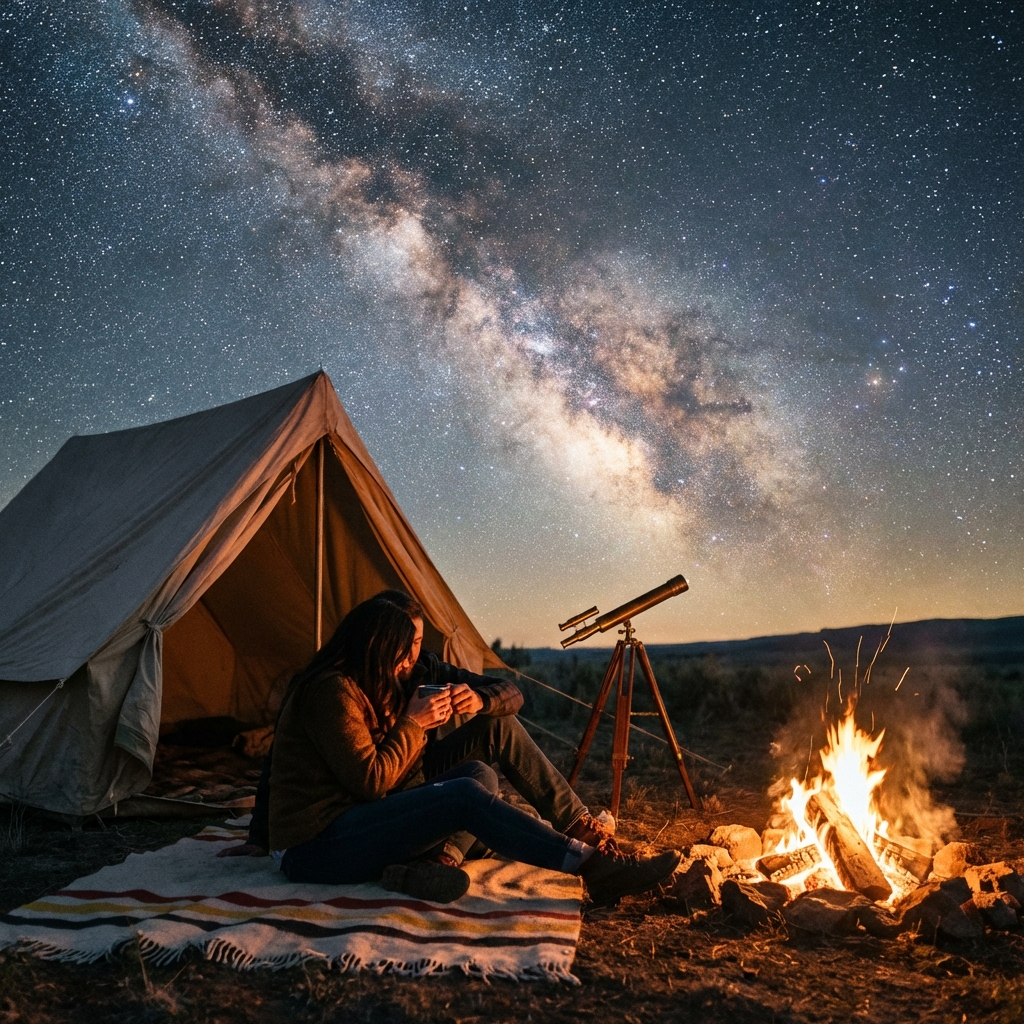
Your First Night Stargazing: Complete 2026 Guide
Everything you need for your first night under the stars. Learn to find dark sky locations, navigate constellations, and master stargazing with zero gear.
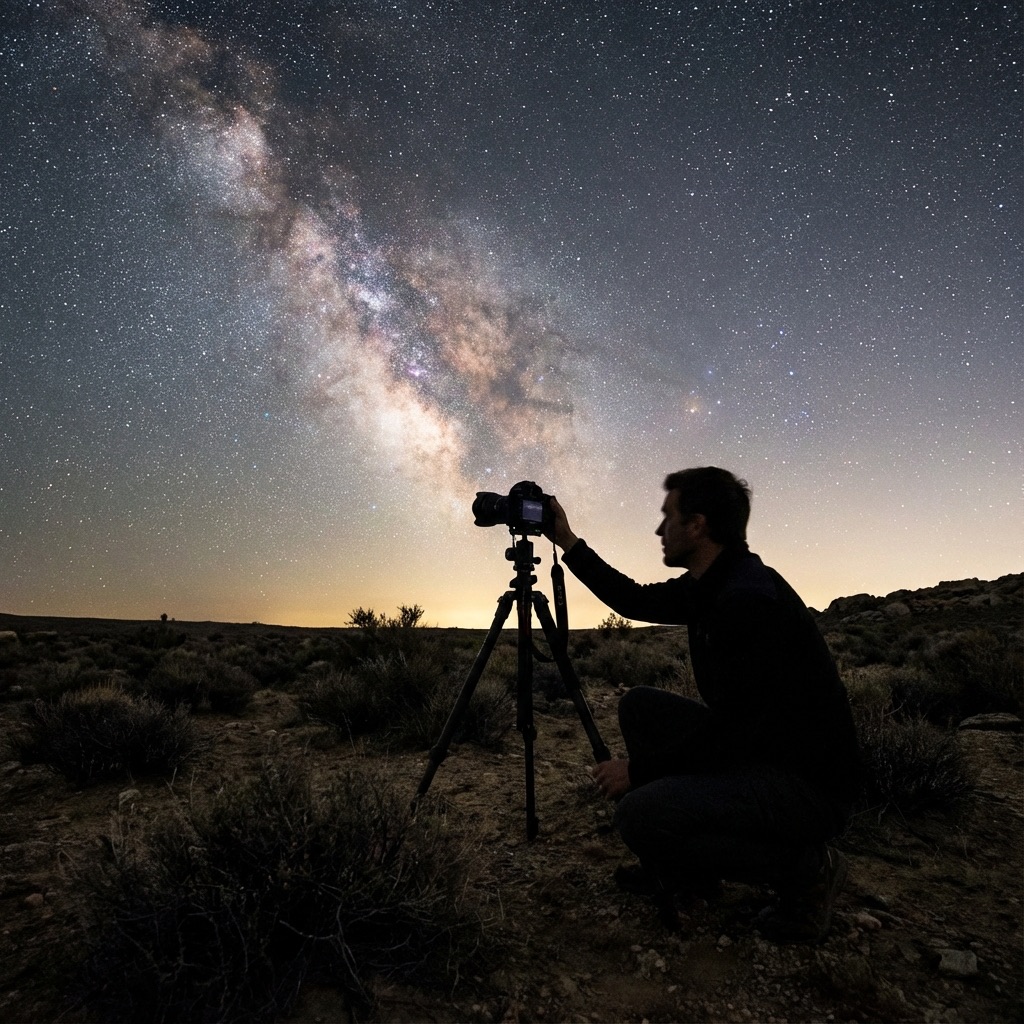
Astrophotography on a Budget: Milky Way for Under $500
Learn to photograph the night sky with affordable equipment. Our complete gear guide shows you how to capture the Milky Way for under $500.
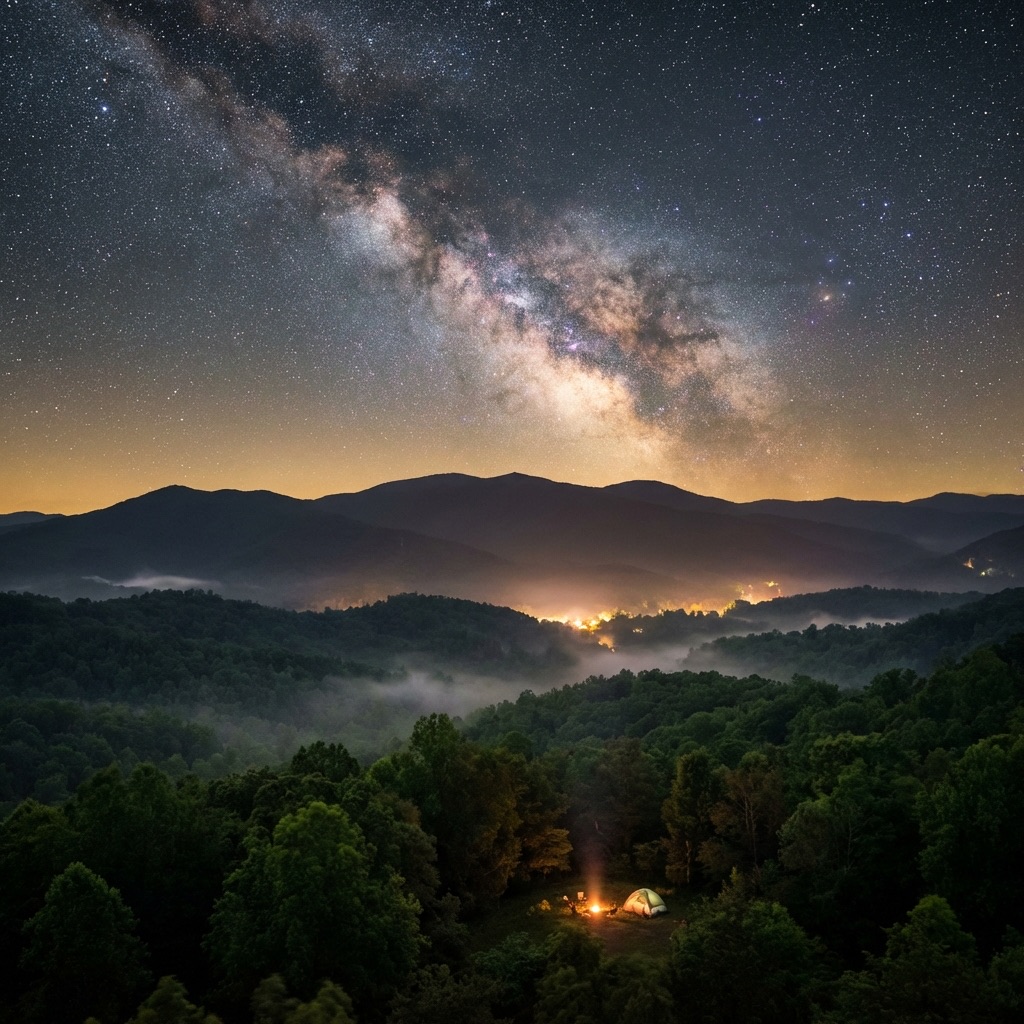
Best Stargazing Near Atlanta: 6 Southeast Dark Sky Escapes
Find the real night sky! 6 stunning dark sky spots near Atlanta—Stephen C. Foster, Blue Ridge Mountains, and hidden Georgia gems. Bortle ratings included.
End of Dossier • Research Complete