
Atlanta Stargazing: The Best Dark Sky Escapes
Finding a truly dark sky near Atlanta can feel impossible with the ever-growing light dome. However, if you know where to drive, there are still pristine pockets of darkness waiting to be explored.

DH Research Lab
Data & Editorial Board
Expert Tested Gear & Affiliate Disclosure
This guide contains affiliate links. As an Amazon Associate, we earn from qualifying purchases.
01When to Leave the City
The key to stargazing near Atlanta is timing the weather. Allow at least an hour of driving time past the suburban perimeter to let your eyes adjust to the dropping light pollution.
02Southern Sky Strategy
Stargazing in the South has its own unique set of rewards and challenges:
The Summer Hum: Heat and humidity can create 'soft' views. The best transparency often comes right after a cold front moves through in the fall or winter.
Southern Advantage: Being further south means we get a better view of the galactic core (the brightest part of the Milky Way) as it rises higher above the horizon.
Wildlife: Swamps and forests mean bugs and critters. Always bring repellent and be aware of your surroundings at night.
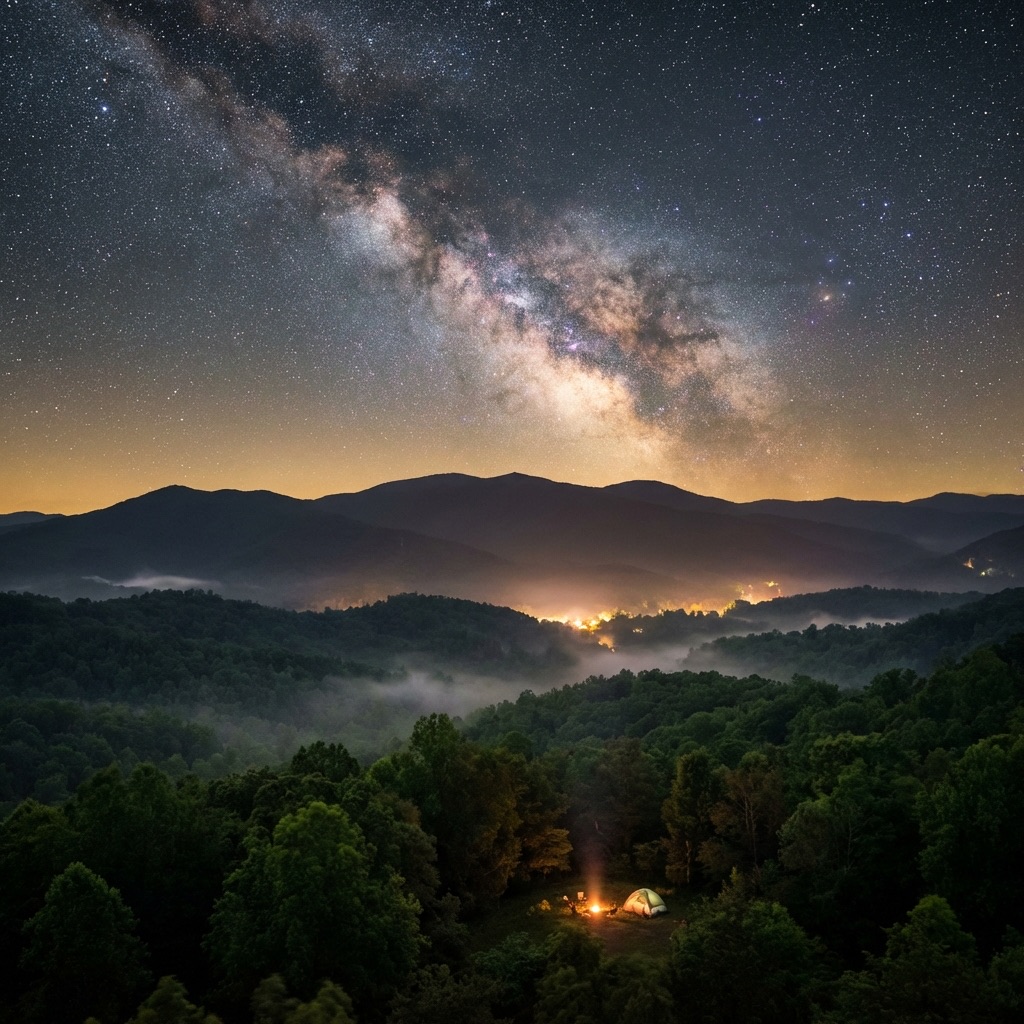
Image Reference: The Milky Way rising vertically over a cypress-lined swamp in southern Georgia.
Bortle Scale
031. Stephen C. Foster State Park
Distance from Atlanta: 4.5 hours | Bortle Class: 2 | Best For: Pristine darkness, swamp aesthetics
Located in the Okefenokee Swamp, this is one of the darkest places in the entire Southeast. It's a gold-tier International Dark Sky Park where the silence is as deep as the darkness.
The Experience:
- Alligators groaning in the dark (safely away from boardwalks!)
- The Milky Way casting a visible reflection in the still swamp water
- Zero light pollution on the horizon
Tip: Stay in the park's cabins or campground. The drive out of the swamp at night is long and requires caution.
Thermacell MR300 Portable Mosquito Repeller
“A must-have for Georgia swamp stargazing.”
RATIONALE
In the Okefenokee, bugs are the only thing that can ruin your night. This creates a 15-foot protection zone so you can focus on the stars.
042. Brasstown Bald
Distance from Atlanta: 2.5 hours | Bortle Class: 4 | Best For: Elevation, mountain panoramas
Georgia's highest point (4,784 ft) puts you above much of the humid valley air. While you can still see the faint glow of Atlanta and Chattanooga on the horizon, the zenith is impressively dark.
Why Visit:
- 360-degree observation deck
- Paved access (short but steep walk from the lot)
- High altitude means cooler nights and better clarity
Image Hint: A wide-angle shot from the tower showing the undulating Blue Ridge Mountains beneath a sea of stars.
Elevation
Highest point in Georgia means less atmosphere to look through.
360 Views
The observation deck provides an unobstructed view of the entire sky.
Breezy
It's often 10-15 degrees cooler here than in Atlanta. Bring a jacket.
053. Hard Labor Creek State Park
Distance from Atlanta: 1 hour | Bortle Class: 5 | Best For: Closest quick session, educational programs
Home to the GSU (Georgia State University) Observatory, this park is the go-to spot for Atlanta-based astronomers. It's not perfectly dark, but it's a massive improvement over the city.
Features:
- Regular public observatory nights
- Easy highway access from I-20
- Large open fields and lakeside viewing
Recommendation: Great for families or anyone wanting to see planets and the brightest deep-sky objects without a long trek.
National Geographic Star Map
“Large, glow-in-the-dark map of the constellations.”
RATIONALE
A physical map is a great way to learn the constellations with kids without the distraction of a phone screen.
064. Deerlick Astronomy Village
Distance from Atlanta: 1.5 hours | Bortle Class: 3-4 | Best For: Dedicated astronomy community
This is a private, gated community designed specifically for amateur astronomers. You can purchase day passes (Grier's Field) to access their dark sky site.
What to Know:
- Highly managed site with strict light rules
- Surrounded by large-acreage farms (low development)
- Gated entry—must register in advance
The Vibe: You'll be surrounded by serious telescope setups and incredibly helpful enthusiasts.
Register Early
075. Vogel State Park Area
Distance from Atlanta: 2 hours | Bortle Class: 4 | Best For: Weekend mountain getaway
Nestled in the Chattahoochee National Forest, Vogel is one of Georgia's oldest state parks. The surrounding mountains block light from nearby towns, providing solid dark sky conditions.
Viewing Suggestion:
- Head to Wolfgap or Hogpen Gap on the Richard B. Russell Scenic Highway for better horizon views than the park valley.
- Lakeside viewing within the park is excellent for reflections.
Image Reference: The Milky Way arcing over Lake Trahlyta with Blood Mountain in the background.
Heritage
One of Georgia's most beloved and scenic state parks.
Reflections
Lake Trahlyta is often perfectly still, mirroring the stars.
Gap Views
The nearby mountain passes offer the best 360-degree vistas.
086. Charlie Elliott Wildlife Center
Distance from Atlanta: 1 hour | Bortle Class: 5 | Best For: Easy access, large open skies
Located near Mansfield, this 6,400-area preserve is a favorite for the Charlie Elliott Astronomy club. The 'Jon Wood Astronomy Field' is a dedicated space for observers.
Why Come Here:
- Large, well-maintained observing field
- Active local club nights (educational)
- Very easy drive from the east side of Atlanta
Note: The field is specifically for astronomy; keep your headlights low when entering and follow park rules.
Celestron PowerSeeker 80AZ
“Beginner-friendly refractor telescope.”
RATIONALE
A great first scope for kids and beginners. It captures plenty of light from Charlie Elliott's skies to show Saturn's rings and lunar craters.
Don't Forget Your Gear
Get our Dark Sky Preparation Checklist and never arrive at a remote site missing a critical piece of equipment again.
Join 2,400+ astronomers • No spam, strictly dark sky intel
Level Up Your Astronomy Skills
Get our premium PDF guides with hundreds of pages of expert advice, gear recommendations, and step-by-step tutorials.
Browse All GuidesFind Your Darkest Sky
Use our real-time satellite maps to find locations with zero light pollution.
Launch Interactive MapPlan Your Deployment
Ready to experience these dark skies yourself? Use our interactive map to find the best dark-sky certified hotels, desert cabins, and observatories near this location.
Booking through this map supports Darkest Hour's light pollution research.
Your Learning Roadmap
You've mastered the travel basics. The next logical step in your technical progression is mastering astrophotography workflows.
MANDATORY FIELD EQUIPMENT
Celestron NexStar 8SE
The gold standard for deep-sky observation. 203mm aperture for maximum light gathering.
ZWO Seestar S50
Fully robotic imaging system. Perfect for urban environments and rapid deployment.
Peak Design Travel Tripod
Zero-latency stability for long exposure astrophotography. Carbon fiber construction.
Continue Your Research
Best Stargazing Near Munich: 6 Alpine Dark Sky Escapes
Alpine stars await! 6 incredible dark sky spots near Munich—Berchtesgaden, Wendelstein, and the Austrian High Alps. Your guide to mountain stargazing.
Best Stargazing Near Denver: 7 Colorado Dark Sky Escapes
High altitude and dark skies! 7 stunning Colorado spots within 3 hours of Denver—Rocky Mountain NP, Great Sand Dunes, and hidden alpine gems.
Stargazing Near Sydney: 6 NSW Dark Sky Escapes
Escape the city lights! 6 incredible NSW dark sky spots near Sydney—Warrumbungle, Blue Mountains, and Mudgee. Southern Hemisphere stars at their best.
End of Dossier • Research Complete