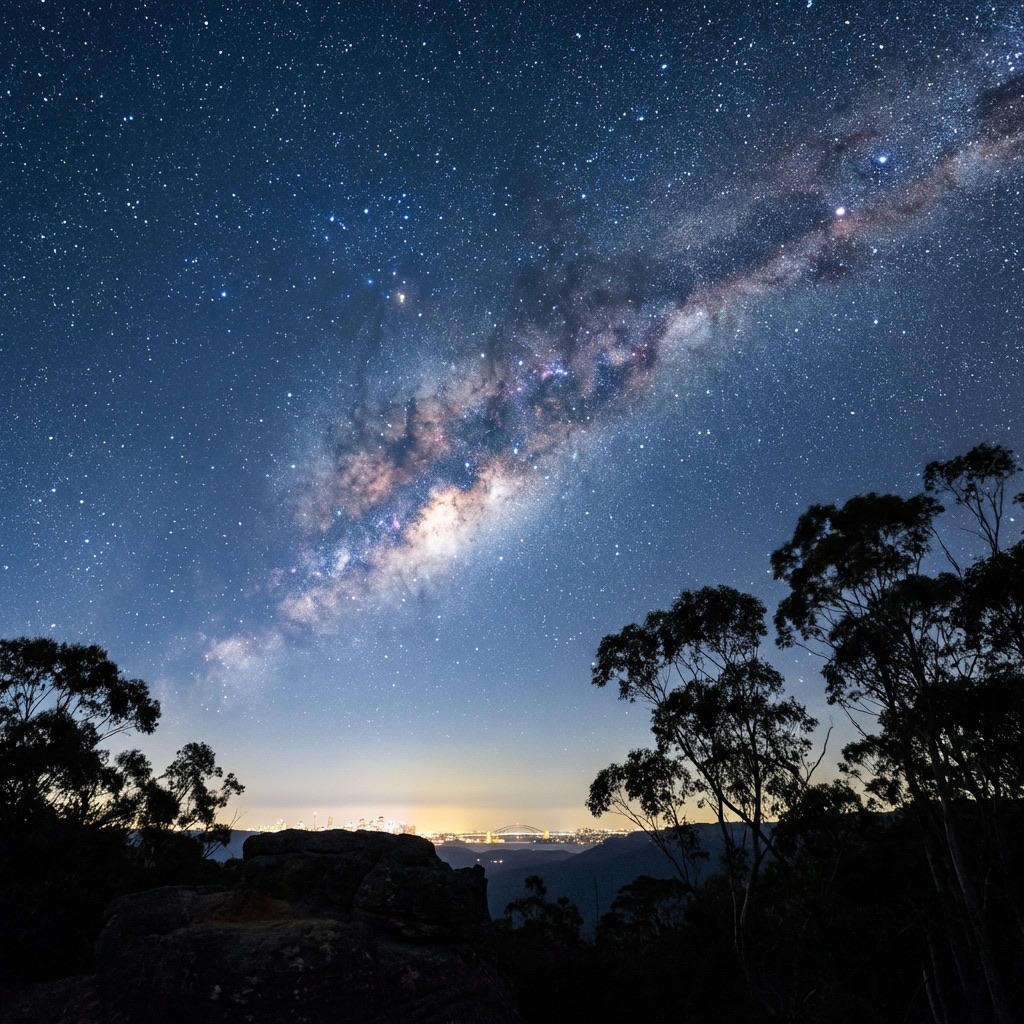
Finding Stars Near Sydney: Top Observing Spots
The artificial skyglow of Sydney drowns out most celestial objects, leaving only the brightest planets visible. But just a few hours away, the true night sky emerges. Here is where local astronomers go to find the stars.
DH Research Lab
Data & Editorial Board
Expert Tested Gear & Affiliate Disclosure
This guide contains affiliate links. As an Amazon Associate, we earn from qualifying purchases.
01When to Leave the City
The key to stargazing near Sydney is timing the weather. Allow at least an hour of driving time past the suburban perimeter to let your eyes adjust to the dropping light pollution.
02The Southern Hemisphere Advantage
Stargazing 'Down Under' offers views that are impossible to see from the Northern Hemisphere:
Galactic Center: From Sydney's latitude, the brightest part of the Milky Way passes directly overhead during winter (June-August), providing unparalleled detail.
Deep South Gems: The Southern Cross, the Coalsack Nebula, and the Large and Small Magellanic Clouds (satellite galaxies to our own) are permanent fixtures of the southern sky.
The Great Dividing Range: These mountains act as a massive shield, blocking the coastal light and moisture, creating stable observing conditions on the western slopes.
Image Tip: The Milky Way arcing directly overhead, with the 'Emu in the Sky' visible in the dark dust lanes of the galactic core.
[Bortle Scale](/glossary#bortle-scale)
031. Warrumbungle National Park
Distance from Sydney: 6 hours | Bortle Class: 1-2 | Best For: Australia's first Dark Sky Park, ultimate darkness
Designated in 2016 as Australia's first International Dark Sky Park, the Warrumbungles offer some of the most pristine night skies in the world. The combination of high altitude and low humidity makes it a paradise for astronomers.
Top Viewing Spots:
- Siding Spring Observatory — Australia's premier optical observatory (daytime visits, but the surrounding area is pristine at night)
- Camp Blackman — Excellent facilities and huge open skies
- Whitegum Lookout — Dramatic volcanic spires silhouetted against the stars
Note: It's a long drive from Sydney. Plan for at least a 2-3 night stay to experience the full intensity of the outback sky.
Sky-Watcher 10-inch Collapsible Dobsonian
“Large aperture for massive light gathering in pristine skies.”
RATIONALE
In a Bortle 1 sky, a 10-inch scope will show you the intricate details of the Carina Nebula and the stars within the Magellanic Clouds.
042. Blue Mountains (Western Escarpment)
Distance from Sydney: 1.5 - 2 hours | Bortle Class: 4 | Best For: Quick escape, dramatic lookouts
The Blue Mountains provide a quick and scenic escape from Sydney. While the eastern towns (Katoomba) have some light, the western escarpment looking away from the city offers great darkness.
Where to Go:
- Hargraves Lookout — Overlooking the Megalong Valley, far from city lights
- Govetts Leap — Dramatic canyon views under the stars
- Mount Victoria — The highest point in the mountains, often sitting above coastal haze
Image Hint: A long exposure of the Milky Way rising over the Three Sisters or the vast Grose Valley.
Elevation
At 1,000m+, you are above the denser coastal air and humidity.
Gully Depth
The deep valleys trap the light of small towns, leaving the horizons dark.
Colder Nights
Always 5-10 degrees cooler than Sydney. Bring a proper coat even in summer.
053. Mudgee & Central West
Distance from Sydney: 3.5 hours | Bortle Class: 3 | Best For: Wine, history, and excellent dark skies
Mudgee is famous for its vineyards, but its position on the western edge of the Great Dividing Range makes it a premier stargazing destination.
Top Spots:
- Mudgee Observatory — Public programs with large telescopes
- Munghorn Gap Nature Reserve — Secluded and exceptionally dark
- Gulgong area — Wide open farmland with perfect horizons
The Experience: Combine a day of wine tasting with a night of world-class stargazing. Numerous B&Bs in the area are 'dark sky friendly.'
iOptron SkyGuider Pro
“Star tracker for pinpoint Milky Way photography.”
RATIONALE
The Central West has perfect horizons for Milky Way photography. This tracker lets you capture the galactic core with incredible detail.
064. Wolgan Valley
Distance from Sydney: 3 hours | Bortle Class: 3 | Best For: Luxury stargazing, extreme canyon darkness
Tucked away in a deep valley surrounded by high sandstone cliffs, the Wolgan Valley is effectively shielded from almost all external light pollution.
Where to Go:
- Emirates One&Only Wolgan Valley — Offers guided stargazing for guests
- Newnes Campground — For a more rugged but equally dark experience
- Donnie's Lookout — Stunning views before descending into the valley
Unique Aspect: The cliffs act as a 'light-well,' creating a pocket of darkness that feels much further from Sydney than it actually is.
Shielded
Massive sandstone cliffs block light domes from every direction.
Silence
The valley floor is incredibly quiet, enhancing the celestial experience.
Eco-Focus
Area dedicated to conservation and preserving the natural night.
075. Hunter Valley (Upper Hunter)
Distance from Sydney: 3 hours | Bortle Class: 4 | Best For: Stargazing among the vines
While the Lower Hunter (Cessnock) can be bright, heading to the Upper Hunter (Scone, Muswellbrook) rewards you with much darker skies and wide-open pastoral horizons.
Top Spots:
- Scone Observatory — Local public viewing nights
- Lake Glenbawn — Dark skies with beautiful water reflections
- Barrington Tops (South) — Sub-alpine plateau with excellent darkness
Bonus: The Upper Hunter is big-sky country. The horizons are flat and the 360-degree views are impressive.
Celestron 15x70 SkyMaster Binoculars
“Budget-friendly way to scan the Southern Cross and Carina Nebula.”
RATIONALE
The southern Milky Way is so dense that binoculars are often better than a telescope for 'cruising' the star fields.
086. Jervis Bay / South Coast
Distance from Sydney: 3 hours | Bortle Class: 4-5 | Best For: Dark horizons over the Pacific
Heading south along the coast leads to Jervis Bay, where the ocean to the east provides a perfectly dark horizon for moonrises and morning Milky Way sessions.
Where to Go:
- Booderee National Park — Incredible darkness over white sand beaches
- Beecroft Peninsula — Dramatic cliffs and sea views
- Hyams Beach — Dark skies away from the town center
Image Idea: The Milky Way rising vertically over the crystal-clear waters and white sands of Jervis Bay.
Bioluminescence Bonus
Frequently Asked Questions
Q:Where is the darkest place to see stars near Sydney?
Warrumbungle National Park is the darkest place near Sydney (Bortle 1), though it is a 6-hour drive. For a closer option, the western side of the Blue Mountains (Hargraves Lookout) or Mudgee offers excellent Bortle 3-4 darkness within 1.5-3 hours.
Q:When is the best time to see the Milky Way core from Sydney?
In the Southern Hemisphere, the Milky Way core is most visible from April to October. It is directly overhead during winter (June-August), providing the most spectacular views and the best conditions for astrophotography.
Q:Can I see the Aurora Australis (Southern Lights) from Sydney?
It is extremely rare to see the Southern Lights from Sydney. You typically need a massive solar storm (Kp 7-8+) and a perfectly dark southern horizon (like Jervis Bay) to see even a faint pink glow. Tasmania or Southern Victoria are much better locations for Aurora hunting.
Q:Do I need a telescope in the Blue Mountains?
While a telescope is great, the Blue Mountains are perfect for 'naked-eye' stargazing and binoculars. A pair of 10x50 binoculars will allow you to see the moons of Jupiter, the rings of Saturn (barely), and the spectacular star clusters around the Southern Cross.
Don't Forget Your Gear
Get our Dark Sky Preparation Checklist and never arrive at a remote site missing a critical piece of equipment again.
Join 2,400+ astronomers • No spam, strictly dark sky intel
Level Up Your Astronomy Skills
Get our premium PDF guides with hundreds of pages of expert advice, gear recommendations, and step-by-step tutorials.
Browse All GuidesFind Your Darkest Sky
Use our real-time satellite maps to find locations with zero light pollution.
Launch Interactive MapPlan Your Deployment
Ready to experience these dark skies yourself? Use our interactive map to find the best dark-sky certified hotels, desert cabins, and observatories near this location.
Booking through this map supports Darkest Hour's light pollution research.
Your Learning Roadmap
You've mastered the destinations basics. The next logical step in your technical progression is mastering astrophotography workflows.
MANDATORY FIELD EQUIPMENT
Celestron NexStar 8SE
The gold standard for deep-sky observation. 203mm aperture for maximum light gathering.
ZWO Seestar S50
Fully robotic imaging system. Perfect for urban environments and rapid deployment.
Peak Design Travel Tripod
Zero-latency stability for long exposure astrophotography. Carbon fiber construction.
Continue Your Research
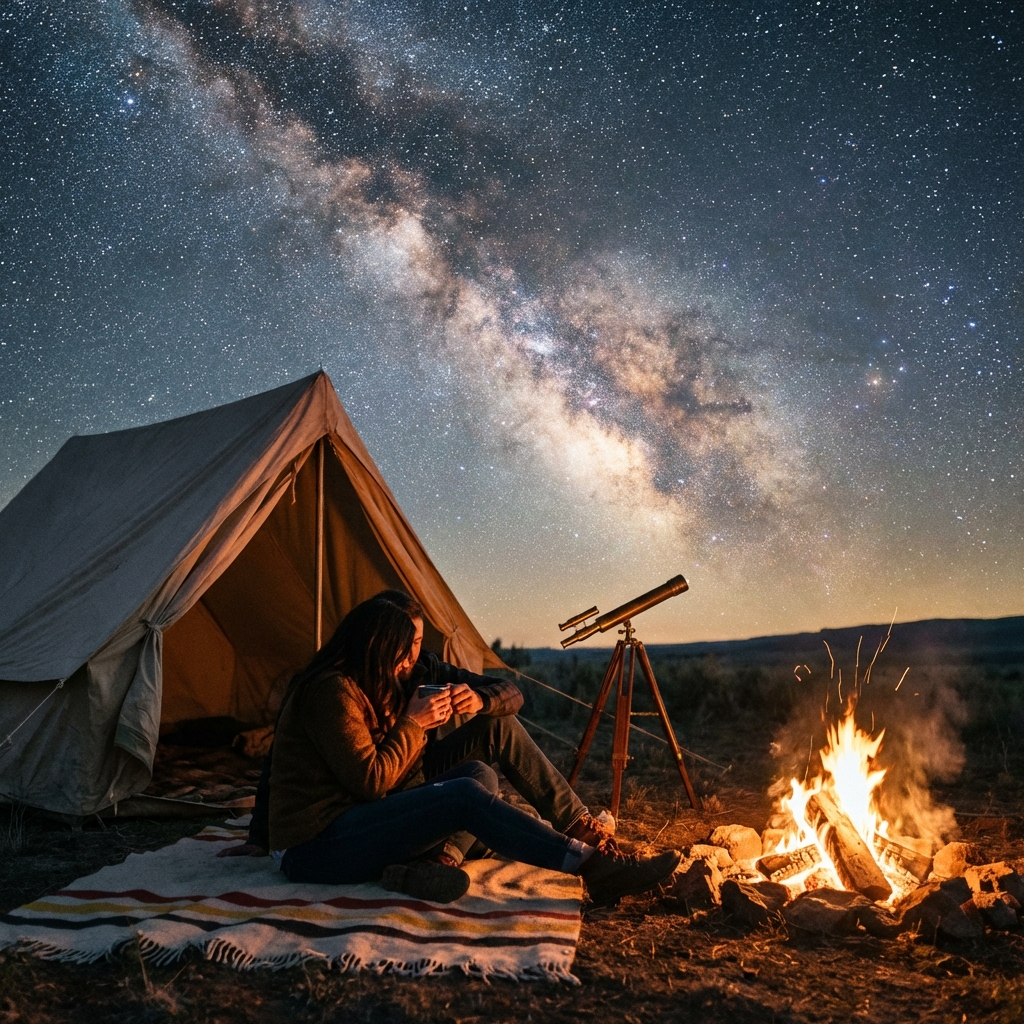
Your First Night Stargazing: Complete 2026 Guide
Everything you need for your first night under the stars. Learn to find dark sky locations, navigate constellations, and master stargazing with zero gear.
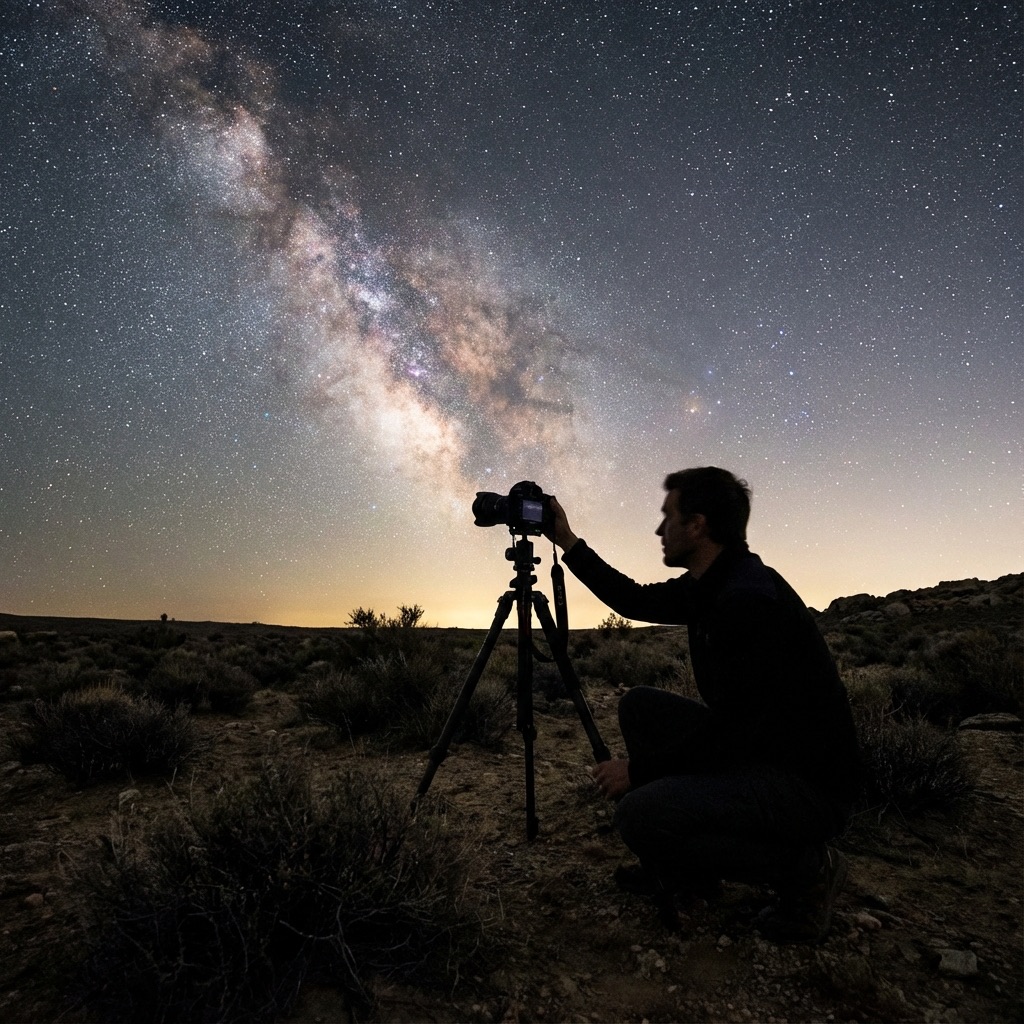
Astrophotography on a Budget: Milky Way for Under $500
Learn to photograph the night sky with affordable equipment. Our complete gear guide shows you how to capture the Milky Way for under $500.
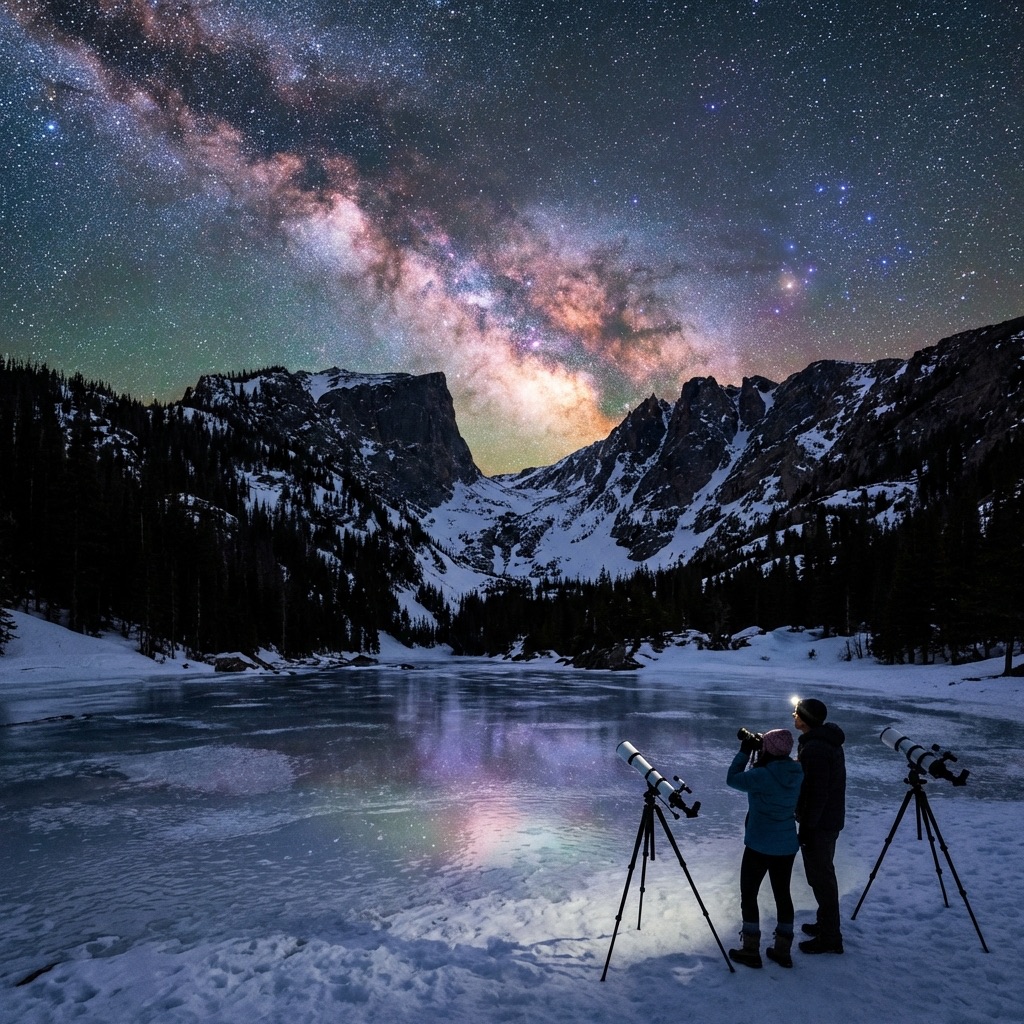
Best Stargazing Near Denver: 7 Colorado Dark Sky Escapes
High altitude and dark skies! 7 stunning Colorado spots within 3 hours of Denver—Rocky Mountain NP, Great Sand Dunes, and hidden alpine gems.
End of Dossier • Research Complete