
Where to Go Stargazing in Perth: Top Dark Sky Spots
Finding a truly dark sky near Perth can feel impossible with the ever-growing light dome. However, if you know where to drive, there are still pristine pockets of darkness waiting to be explored.
DH Research Lab
Data & Editorial Board
Expert Tested Gear & Affiliate Disclosure
This guide contains affiliate links. As an Amazon Associate, we earn from qualifying purchases.
01When to Leave the City
The key to stargazing near Perth is timing the weather. Allow at least an hour of driving time past the suburban perimeter to let your eyes adjust to the dropping light pollution.
02The West's Infinite Night
Western Australia occupies a third of the continent, and its commitment to 'Astro-tourism' is unparalleled.
Isolation Power: Perth is often called the most isolated city on Earth. This isolation translates directly into darkness; once you leave the metropolitan area, you are in some of the most pristine night skies found anywhere. Indian Ocean Horizons: Looking west over the ocean provides a perfectly dark horizon for setting planets and constellations. The Astrotourism WA Network: A state-wide initiative has mapped out dozens of dedicated stargazing and astrophotography towns and sites.
Bortle Scale
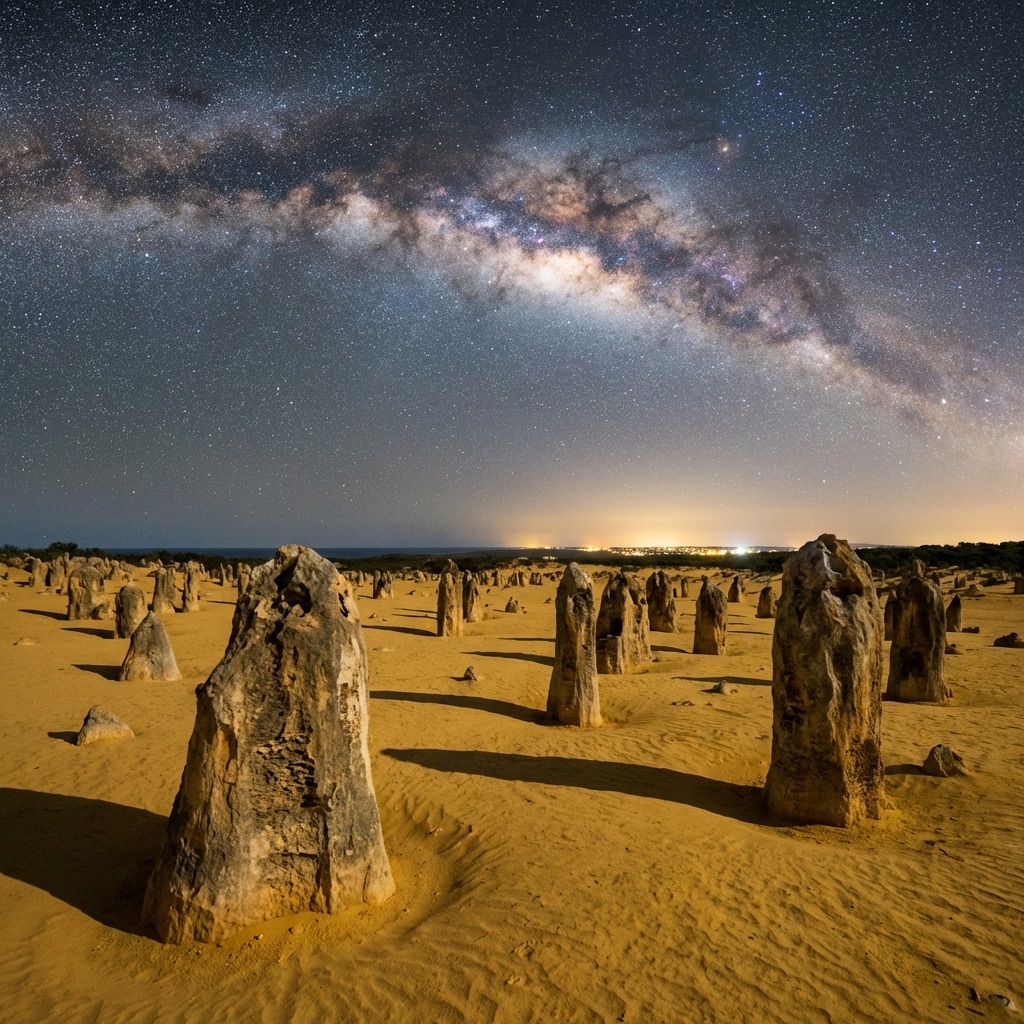
031. The Pinnacles Desert (Nambung National Park)
Distance from Perth: 2 hours | Bortle Class: 2-3 | Best For: Most iconic Martian-like landscape for photography
The Pinnacles are thousands of limestone pillars rising from the yellow sand. At night, it feels like another planet under the Milky Way.
Highlights:
- Surreal silhouettes for foregrounds.
- Generally clear coastal air.
- Safe, easy walking on sandy tracks.
Image Tip: The core of the Milky Way rising directly above a massive limestone 'tooth' in the desert.
Stay22 - Cervantes & Pinnacles Stays
“Find motels and stays in the coastal town of Cervantes.”
RATIONALE
Staying in Cervantes allows you to stay in the desert until the early hours and be back in bed in 15 minutes.
042. Perth Observatory (Bickley)
Distance from Perth: 45 mins | Bortle Class: 4-5 | Best For: History and guided tours
Located in the Perth Hills, this is Australia's oldest continuously operating observatory.
Why go:
- Public 'Star Viewing' nights where you use various historic and modern telescopes.
- Learn about the Indigenous 'Noongar' astronomical traditions.
- Museum on-site with incredible meteorites and space artifacts.
Orion 10x50 Binoculars
“Classic astronomy binoculars—perfect for wide-field scanning.”
RATIONALE
Perfect for scanning the star fields of the Milky Way while waiting for your turn at the observatory telescopes.
053. Moore River & Guilderton
Distance from Perth: 1 hour 15 mins | Bortle Class: 3-4 | Best For: Quickest high-quality coastal darkness
The point where the Moore River meets the Indian Ocean offers beautiful, dark views looking west and north.
Highlights:
- The dark river water provides perfect mirror reflections.
- Minimal light from the small holiday town of Guilderton.
- Great beaches for wide-angle horizon shots.
Cervantes Approach
The start of the 'Astrotourism' trail north of Perth.
Horizons
Perfectly dark horizons over the ocean to the west.
Easy Trip
Reachable for a quick session before returning to the city.
064. Lake Leschenaultia
Distance from Perth: 50 mins | Bortle Class: 4-5 | Best For: Camping and calm water reflections
Located in the Mundaring hills, this former railway dam is a favorite for local astronomers.
What to expect:
- Surrounded by dense eucalypt forest, which blocks light from the surrounding suburbs.
- Camping available right near the water.
- Very quiet, still environment.
Still Water
075. Grave Village (Southern Cross)
Distance from Perth: 4 hours | Bortle Class: 1-2 | Best For: Deeper outback experience
Heading east toward the wheatbelt and goldfields, you find towns actually named after the stars.
Sites:
- Specifically designed astrophotography sites with minimal light footprints.
- Experience the 'Great Silence' of the WA interior.
- Milky Way so bright it can cast a faint shadow.
Omega Centauri
From this latitude and darkness, this massive star cluster is clearly visible to the naked eye.
Dry Air
Low humidity ensures the stars stay steady and don't twinkle excessively.
Road Trains
Be careful driving east on the Great Eastern Highway at night; watch for massive trucks.
086. Ningaloo Reef (Exmouth)
Distance from Perth: 12 hour drive / 2 hour flight | Bortle Class: 1 | Best For: The world's ultimate total solar eclipse destination
While very far, Exmouth and the Ningaloo Reef offer skies as dark as the Atacama. It is home to the Ningaloo Centre and several world-class observatories.
Sony 14mm f/1.8 GM Lens
“Ultra-wide, ultra-fast lens for the ultimate WA shots.”
RATIONALE
Capture the entire arch of the Milky Way over the limestone pillars of the Pinnacles with professional sharpness.
Don't Forget Your Gear
Get our Dark Sky Preparation Checklist and never arrive at a remote site missing a critical piece of equipment again.
Join 2,400+ astronomers • No spam, strictly dark sky intel
Level Up Your Astronomy Skills
Get our premium PDF guides with hundreds of pages of expert advice, gear recommendations, and step-by-step tutorials.
Browse All GuidesFind Your Darkest Sky
Use our real-time satellite maps to find locations with zero light pollution.
Launch Interactive MapPlan Your Deployment
Ready to experience these dark skies yourself? Use our interactive map to find the best dark-sky certified hotels, desert cabins, and observatories near this location.
Booking through this map supports Darkest Hour's light pollution research.
Your Learning Roadmap
You've mastered the destinations basics. The next logical step in your technical progression is mastering astrophotography workflows.
MANDATORY FIELD EQUIPMENT
Celestron NexStar 8SE
The gold standard for deep-sky observation. 203mm aperture for maximum light gathering.
ZWO Seestar S50
Fully robotic imaging system. Perfect for urban environments and rapid deployment.
Peak Design Travel Tripod
Zero-latency stability for long exposure astrophotography. Carbon fiber construction.
Continue Your Research
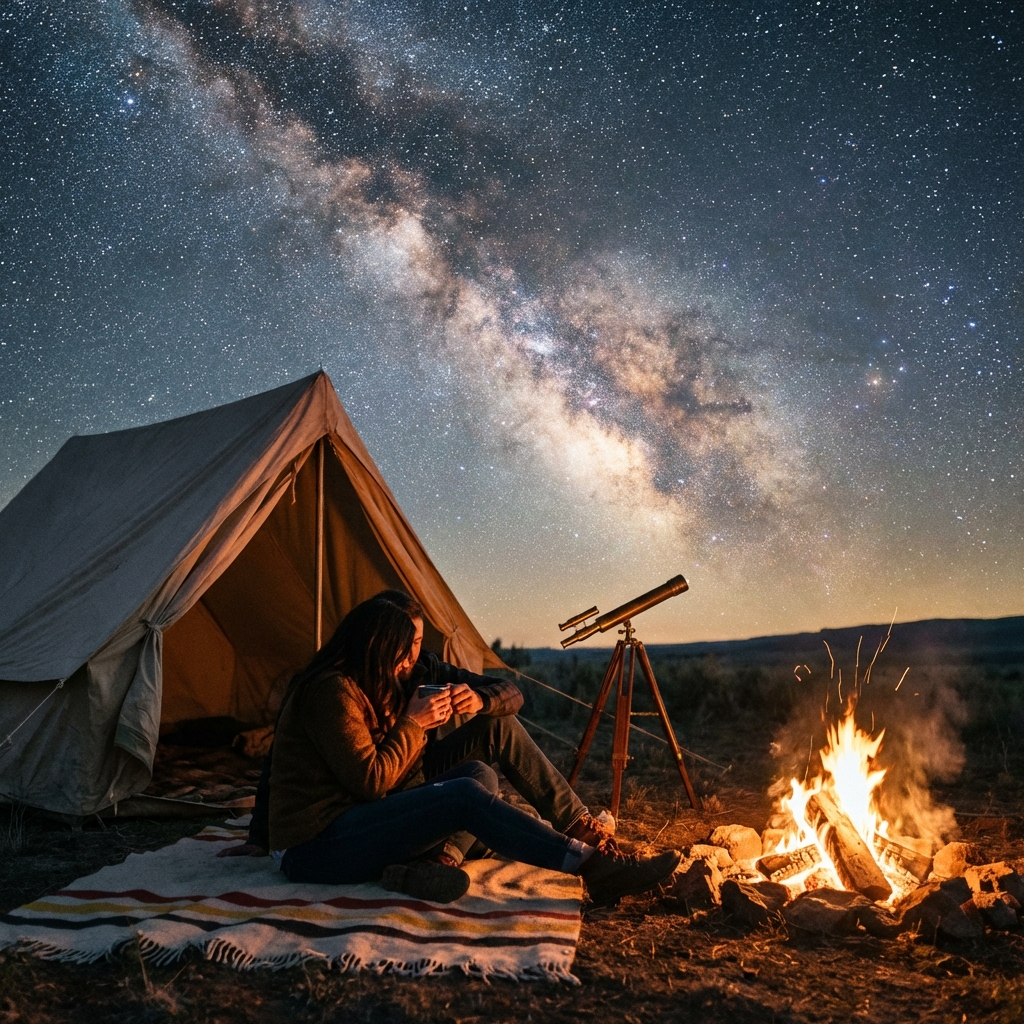
Your First Night Stargazing: Complete 2026 Guide
Everything you need for your first night under the stars. Learn to find dark sky locations, navigate constellations, and master stargazing with zero gear.
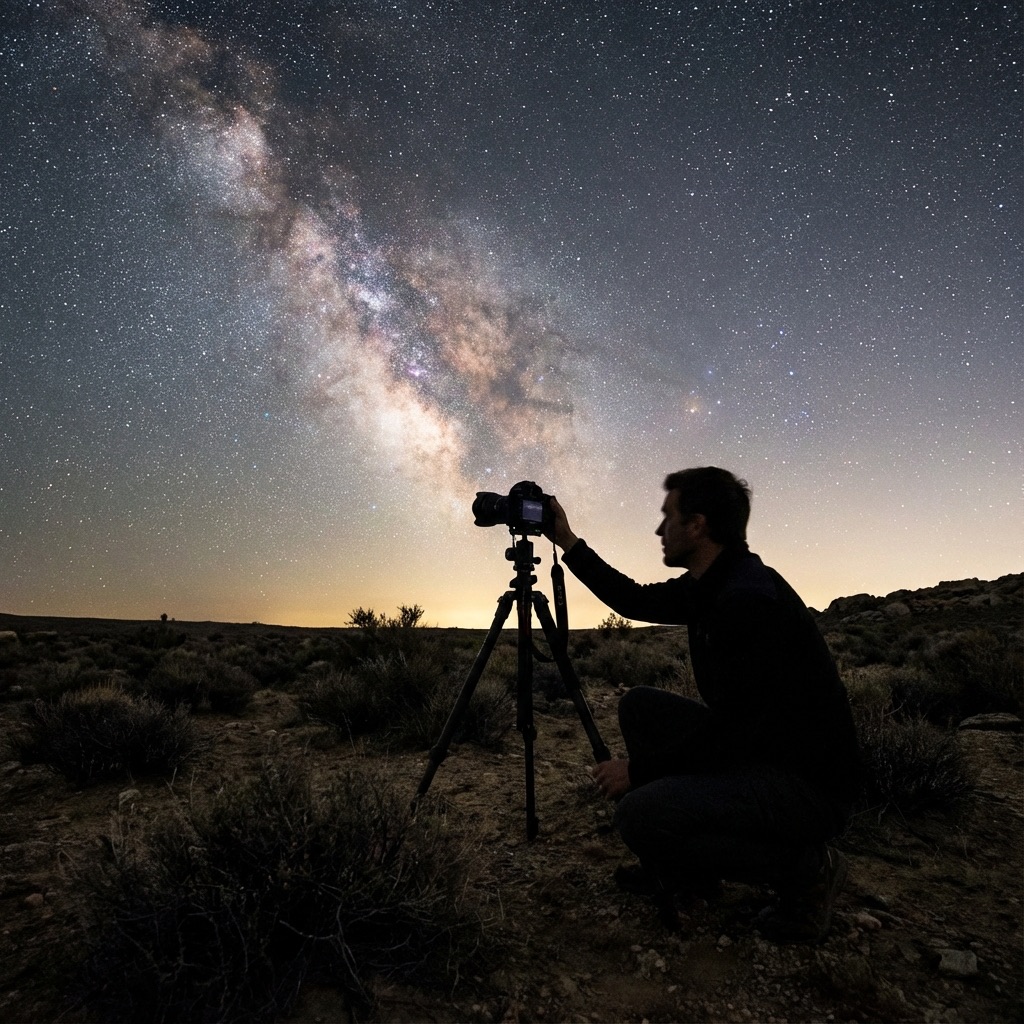
Astrophotography on a Budget: Milky Way for Under $500
Learn to photograph the night sky with affordable equipment. Our complete gear guide shows you how to capture the Milky Way for under $500.
Meteor Shower Calendar 2026: Don't Miss These Events
Your complete guide to every major meteor shower in 2026. Find peak dates, hourly rates (ZHR), and expert photography tips for each event.
End of Dossier • Research Complete