
Best Places to See the Southern Lights (Aurora Australis)
While the Northern Lights get most of the fame, the Aurora Australis—the Southern Lights—is a more elusive and equally breathtaking phenomenon. Because there is less landmass in the far south, finding the right viewing spot is key. From the rugged coastlines of Tasmania to the mountain peaks of New Zealand, here is where you can find the southern glow.
DH Research Lab
Data & Editorial Board
Expert Tested Gear & Affiliate Disclosure
This guide contains affiliate links. As an Amazon Associate, we earn from qualifying purchases.
01Lake Tekapo, New Zealand
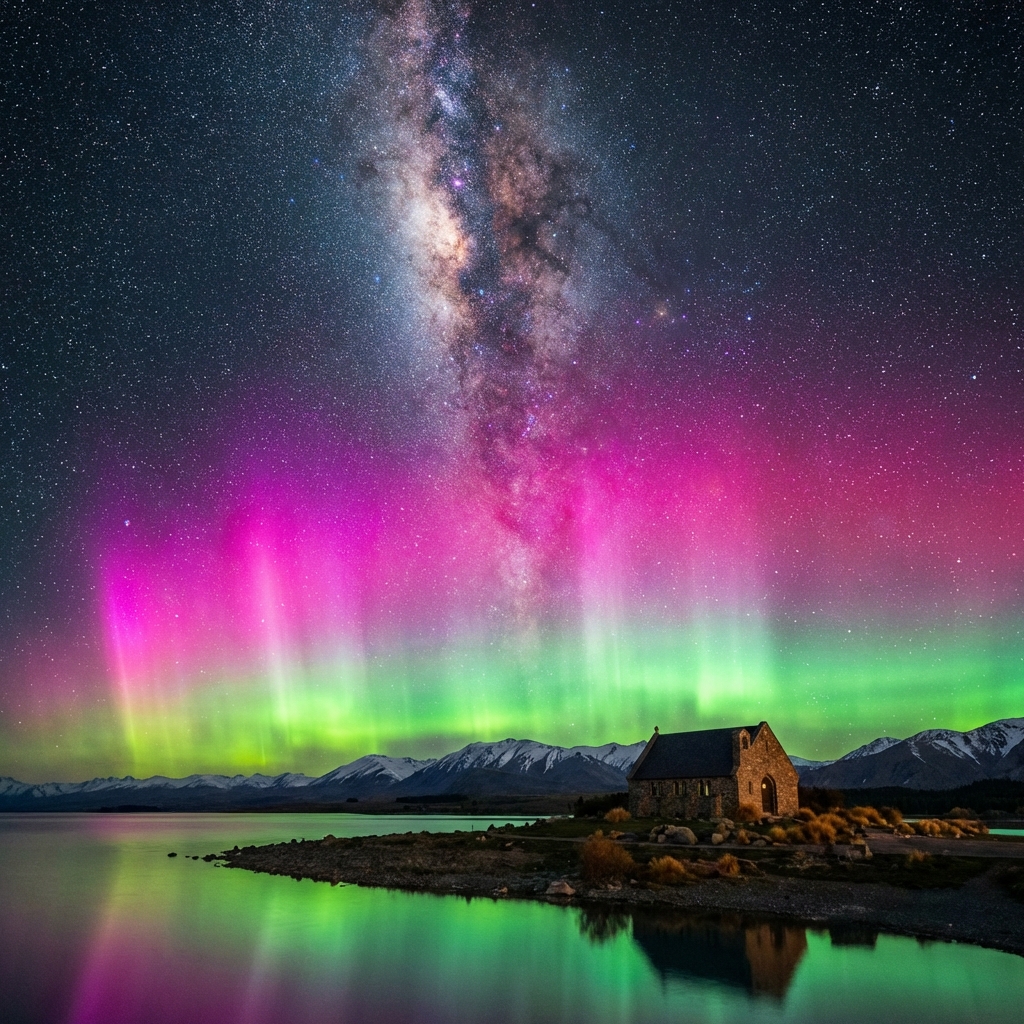
Part of the Aoraki Mackenzie International Dark Sky Reserve, Lake Tekapo is arguably the best place in the Southern Hemisphere for astronomy. The Southern Lights here often appear as a vibrant pink or green glow over the Southern Alps.
Highlight:
- World-class dark sky certification (Bortle 1-2).
- The Church of the Good Shepherd provides an iconic silhouette for photographers.
- Professional observatories on-site (Mt. John).
Manfrotto BeFree Advanced Travel Tripod
“Stable, lightweight tripod for long-exposure photography.”
RATIONALE
NZ winds can be brutal. You need a tripod that's portable enough for hiking but stable enough to keep your camera still for 20-second exposures.
02South Arm Peninsula, Tasmania
Tasmania is the closest you can get to the south magnetic pole while still being on a civilized landmass. The South Arm Peninsula, just south of Hobart, is a favorite for local 'aurora hunters.'
Pro Tip:
- Look south over the ocean to avoid light pollution from Hobart.
- Use our live Kp index on the dashboard to time your trip. A Kp of 5 or higher is usually needed for a visible display in Tasmania.
Southern Advantage
03Stewart Island, New Zealand
Known as 'Rakiura' (the land of glowing skies) in Māori, Stewart Island is New Zealand's southernmost populated island and a designated International Dark Sky Sanctuary.
Why go:
- Extremely remote and undisturbed darkness.
- The most southerly accessible viewing points in New Zealand.
- Incredible biodiversity and birdwatching during the day.
Remote Access
Take the ferry from Bluff for a true off-grid adventure.
Pure Dark
One of the few places with almost zero light pollution.
Celestial Pole
Perfect for capturing star trails around the South Celestial Pole.
04Ushuaia, Argentina & Beyond
The southernmost city in the world offers legitimate aurora viewing opportunities during strong geomagnetic storms.
What to expect:
- Auroras visible during major storms (Kp 6+)
- Unique opportunity to combine aurora hunting with Patagonia adventure
- Access to Antarctic cruise departures
Alternative: South Georgia Island Expedition cruises to South Georgia occasionally capture stunning aurora displays, combined with extraordinary wildlife. Not cheap, but unforgettable.
Aurora Alert Apps
05Photographing the Aurora Australis
The southern lights differ from their northern counterpart in some key ways:
Color Differences: Southern auroras often display more pink and red hues due to different atmospheric conditions. Set your white balance around 4000-4500K to capture these warmer tones.
The South Celestial Pole: Unlike the north, there's no "South Star" to mark the pole. Use apps to locate it for dramatic star trail + aurora compositions.
Essential Settings:
| Condition | Shutter | ISO | Aperture |
|---|---|---|---|
| Faint glow | 15-25s | 3200-6400 | f/2.8 |
| Active display | 4-10s | 1600-3200 | f/2.8 |
| Bright storm | 1-4s | 800-1600 | f/2.8 |
Rokinon 14mm f/2.8 Wide Angle Lens
“Budget aurora lens with proven performance.”
RATIONALE
At a third the price of premium lenses, this Rokinon captures remarkably sharp aurora images. The go-to for budget-conscious photographers.
Frequently Asked Questions
Q:When is the best time to see the Southern Lights?
The Southern Lights (Aurora Australis) can be seen year-round, but the best viewing is during the winter months (March to September) when the nights are longest. Like the Northern Lights, activity peaks around the autumn and spring equinoxes.
Q:Where is the best place to see the Aurora Australis?
Top locations include Lake Tekapo and Stewart Island in New Zealand, and Tasmania (particularly the South Arm Peninsula) in Australia. For the truly adventurous, Antarctica or its surrounding islands like South Georgia offer the most frequent displays.
Q:Is it harder to see the Southern Lights than the Northern Lights?
Geographically, yes. There is much less populated land at high southern latitudes compared to the north. While you can drive far beyond the Arctic Circle in Norway or Canada, you are limited to the southern tips of New Zealand, Australia, and South America for mainland viewing.
Q:What Kp index do I need for the Southern Lights?
For locations like Tasmania and the South Island of New Zealand, you typically need a Kp index of 5 or higher for a prominent, visible display. During strong storms (Kp 7+), the lights can be seen from further north, including parts of mainland Australia and southern Africa.
Q:What colors are the Southern Lights?
While green is common, the Aurora Australis frequently displays beautiful pink, red, and purple hues. These colors depend on the type of gas being excited by solar particles and the altitude at which the interaction occurs.
Don't Forget Your Gear
Get our Dark Sky Preparation Checklist and never arrive at a remote site missing a critical piece of equipment again.
Join 2,400+ astronomers • No spam, strictly dark sky intel
Level Up Your Astronomy Skills
Get our premium PDF guides with hundreds of pages of expert advice, gear recommendations, and step-by-step tutorials.
Browse All GuidesFind Your Darkest Sky
Use our real-time satellite maps to find locations with zero light pollution.
Launch Interactive MapPlan Your Deployment
Ready to experience these dark skies yourself? Use our interactive map to find the best dark-sky certified hotels, desert cabins, and observatories near this location.
Booking through this map supports Darkest Hour's light pollution research.
Your Learning Roadmap
You've mastered the travel basics. The next logical step in your technical progression is mastering astrophotography workflows.
MANDATORY FIELD EQUIPMENT
Celestron NexStar 8SE
The gold standard for deep-sky observation. 203mm aperture for maximum light gathering.
ZWO Seestar S50
Fully robotic imaging system. Perfect for urban environments and rapid deployment.
Peak Design Travel Tripod
Zero-latency stability for long exposure astrophotography. Carbon fiber construction.
Continue Your Research
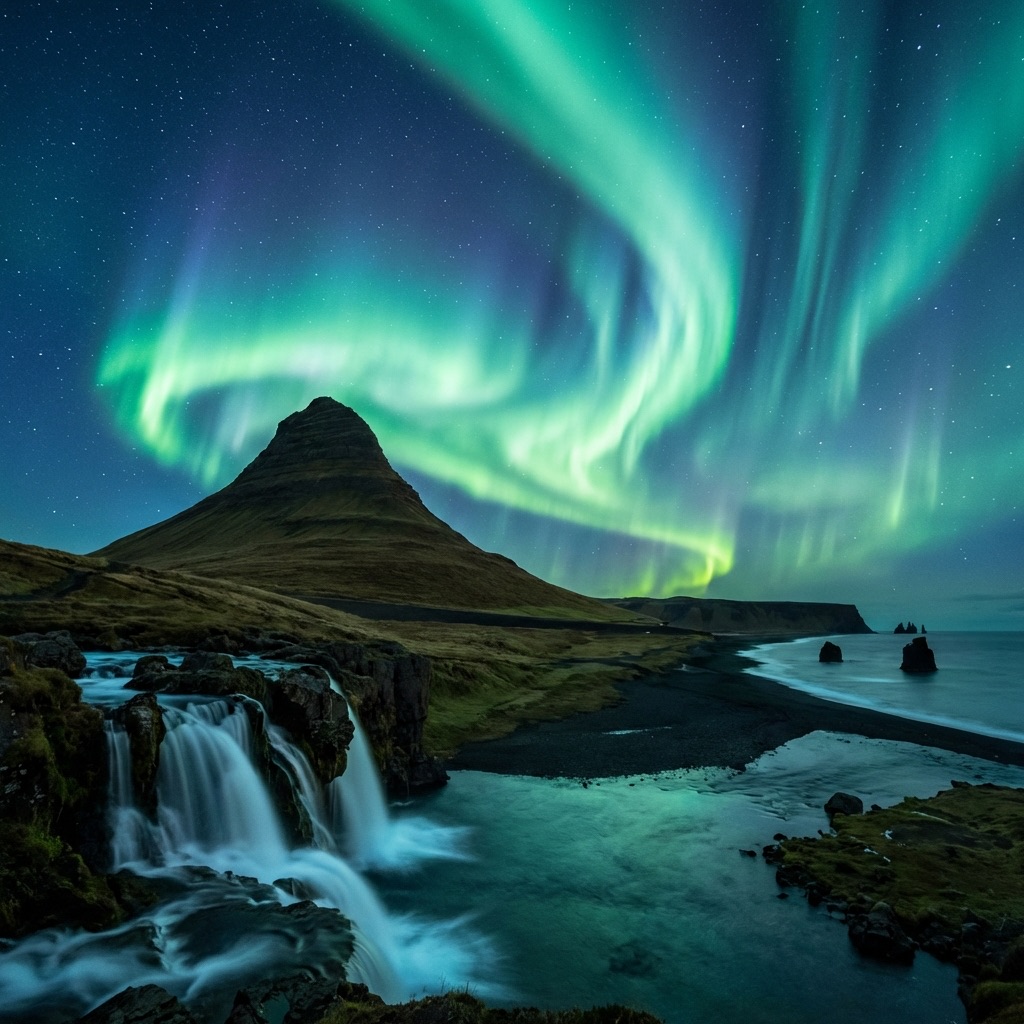
Northern Lights in Iceland: 6 Stunning Spots
Iceland is aurora heaven! 6 dark sky spots—Jökulsárlón, Kirkjufell, and more. Your guide to 2026 aurora tracking made easy.
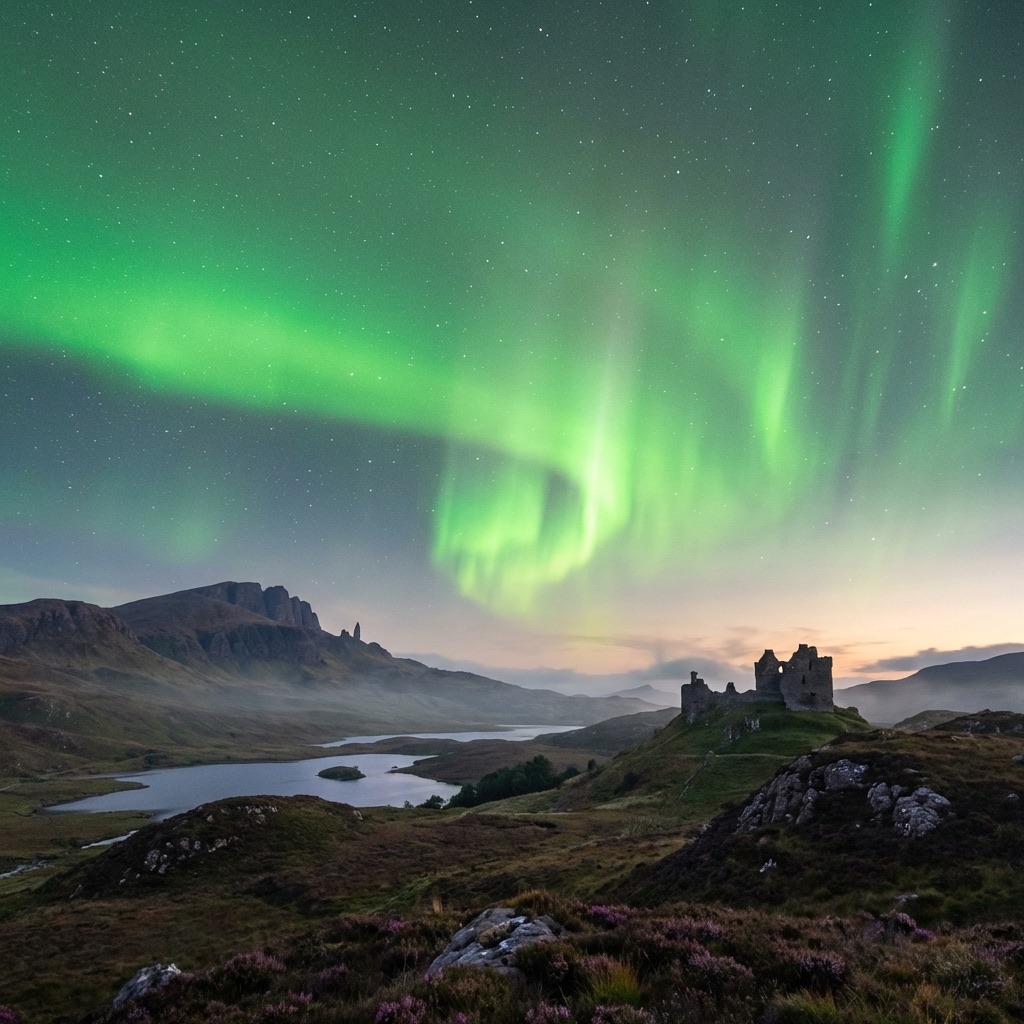
Northern Lights in Scotland: 6 Highland Spots
Aurora hunting in the UK! 6 stunning Scotland dark sky spots—Isle of Skye, Galloway, and the northern Highlands. Find the 'Mirrie Dancers'.
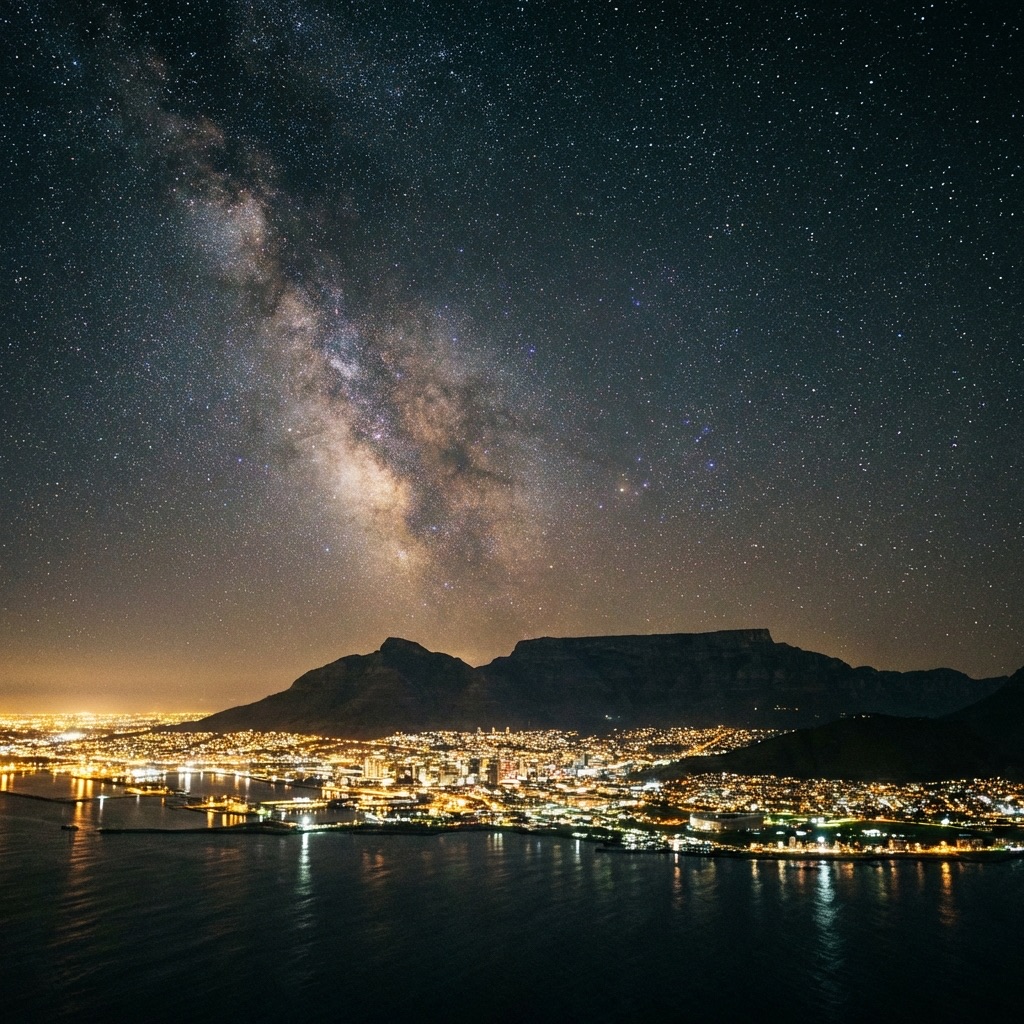
Stargazing Near Cape Town: 6 South Africa Escapes
Southern African stars! 6 incredible dark sky spots near Cape Town—Sutherland, Cederberg, and the Karoo. Your guide to South Africa's best stars.
End of Dossier • Research Complete