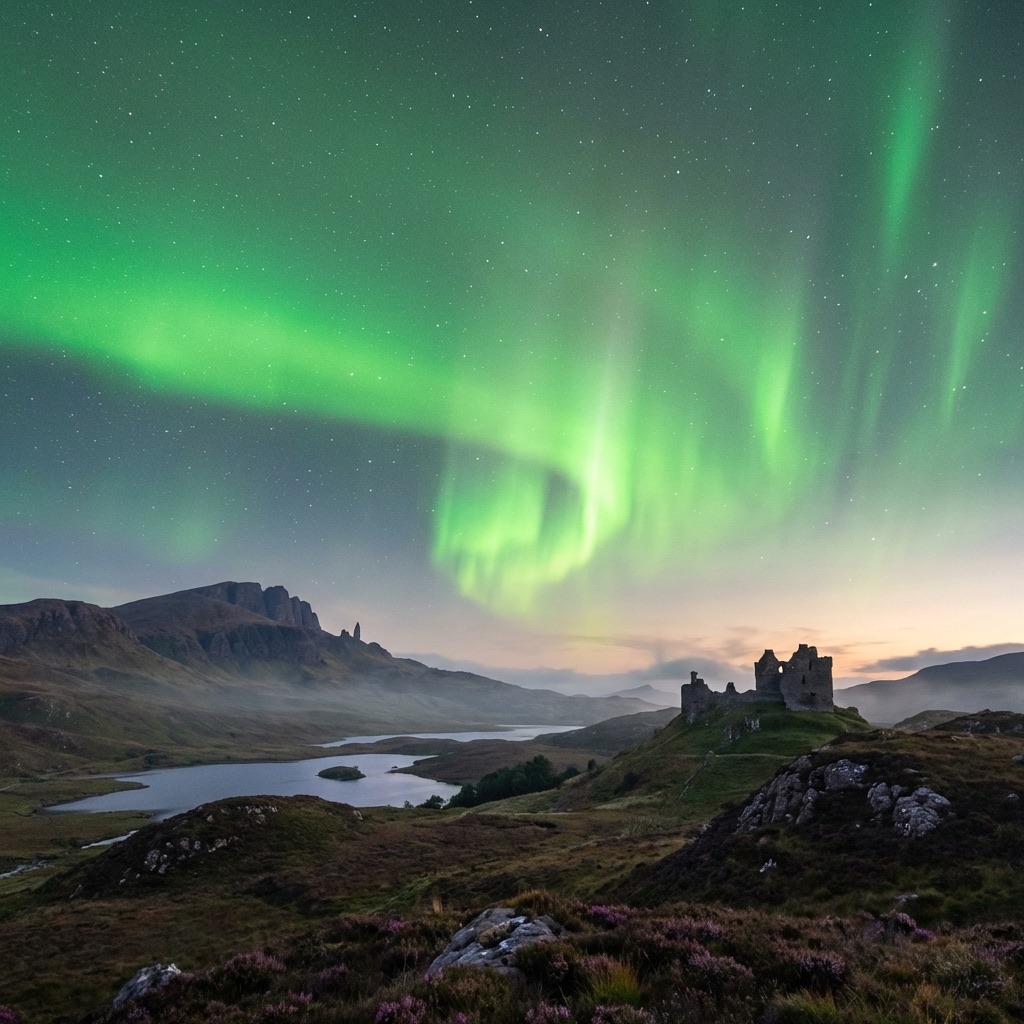
Best Places to See Northern Lights in Scotland: 6 Highland Escapes (2026)
The Scottish Highlands represent the northernmost dark-sky frontier of the United Kingdom, offering critical access to the 'Mirrie Dancers' and Gold Tier atmospheric telemetry. This dossier identifies the primary high-latitude windows and dark-sky parks for capturing the northern celestial sphere from the Scottish sector.
DH Research Lab
Data & Editorial Board
Expert Tested Gear & Affiliate Disclosure
This guide contains affiliate links. As an Amazon Associate, we earn from qualifying purchases.
01The Scottish Strategy
Aurora hunting in Scotland requires a specific approach:
The North Coast Advantage: The northern tip of Scotland (Sutherland and Caithness) has an unobstructed view over the North Sea toward the Pole—crucial for seeing the lights when activity is lower.
Cloud Cover: Scotland is famous for its rain. The trick is to head to the east side of the Highlands (the 'rain shadow'), which often remains clear while the west is overcast.
Bortle Quality: Scotland has some of the largest areas of Bortle 1 and 2 skies in Europe, perfect for deep-sky stargazing even if the aurora doesn't appear.
Image Tip: The aurora reflecting in the calm waters of a sea loch, with a silhouetted castle or ancient standing stones in the foreground.
The Mirrie Dancers
021. Galloway Forest Dark Sky Park
Distance from Glasgow: 2 hours | Bortle Class: 2 | Best For: First UK Dark Sky Park, accessibility
Established in 2009, Galloway was the first International Dark Sky Park in the UK. While it's in the south, its extreme darkness makes it a top-tier stargazing site.
Where to Go:
- Clatteringshaws Loch — Huge horizons and a dedicated visitor center
- Bruce's Stone — Elevated views over Loch Trool
- The Scottish Dark Sky Observatory — (Check for reopening status/tours)
Note: For the Aurora, Galloway requires a higher solar activity index (Kp 5+), but for general stargazing, it is unbeatable in the UK.
Celestron SkyMaster Pro 20x80 Binoculars
“Giant binoculars for immersive deep-sky viewing.”
RATIONALE
Galloway's skies are so dark that the clouds of the Milky Way are visible to the naked eye. These binoculars resolve them into thousands of individual stars.
032. The Isle of Skye
Distance: 5 hours from Glasgow | Bortle Class: 2 | Best For: Dramatic geology, dark coastal horizons
Skye is a global icon for a reason. Its 'Dark Sky Discovery Sites' are scattered across the island, offering some of the most dramatic foregrounds in the world.
Top Spots:
- The Old Man of Storr — Ancient rock pinnacles under the stars
- Neist Point Lighthouse — The edge of the world, looking west and north
- Loch Mealt / Kilt Rock — Dramatic cliffs and sea views
Image Hint: The Northern Lights shimmering behind the Cuillin mountain range, with the lights of a lone cottage in the glen.
Scale
The dramatic peaks of Skye provide world-class scale for astrophotography.
Exposed
Skye is the 'Misty Isle'—be prepared for fast-moving wind and clouds.
Quiet Spots
Endless remote pull-outs for total isolation under the stars.
043. Shetland & Orkney Islands
Distance: Flight or Ferry from Aberdeen | Bortle Class: 2-3 | Best For: Most frequent aurora sightings
Being the furthest north you can get in the UK, these islands see the Aurora far more frequently than the mainland. If there's action in Norway, there's action here.
The Experience:
- Northern lights visible even during low solar activity
- Prehistoric sites (Skara Brae, Callanish-style stones) under the stars
- True Arctic-fringe environment
Tip: Visit in January or February during the 'Up Helly Aa' fire festivals for a truly Norse-style experience under the lights.
Nitecore NU25 UL Headlamp
“Ultralight rechargeable headlamp with red mode.”
RATIONALE
Standard equipment for navigating rocky island cliffs while keeping your hands free for your camera.
054. Cairngorms National Park
Distance from Edinburgh: 3 hours | Bortle Class: 3 | Best For: High altitude, mountain landscapes
The Cairngorms feature the highest plateau in Britain. Being inland and elevated, the air is often drier and the skies clearer than on the coast.
Where to Go:
- Glenlivet Estate — A certified Dark Sky Discovery site
- Cairngorm Mountain Base — High elevation and easy car access
- Loch Morlich — Sandy beach reflections with snow-capped peaks
Strategy: The Cairngorms are excellent for 'winter-style' stargazing with reliable snow cover providing a bright, clean foreground.
Elevation
The highest stargazing sites in the UK.
Stability
Inland air is often more stable for telescope viewing.
Wilderness
Vast pine forests and mountain plateaus.
065. The North Coast 500 (Assynt)
Distance: 2 hours north of Inverness | Bortle Class: 1-2 | Best For: Pristine darkness, sea stacks
The Assynt region of the NW Highlands is one of the most sparsely populated areas in Europe. The darkness here is profound.
Top Spots:
- Oldany Island — Zero light pollution looking north
- Ardvreck Castle — Ruined castle reflections in Loch Assynt
- Stoer Lighthouse — Views over the Minch toward the Outer Hebrides
Note: The NC500 is a narrow single-track road. Driving at night requires extreme care due to deer on the road.
Wildlife
076. Moffat (Europe's first Dark Sky Town)
Distance from Edinburgh: 1 hour | Bortle Class: 4 | Best For: Dark sky hospitality
Moffat became the first Dark Sky Town in Europe by changing all its streetlights to become 'star-friendly.' It's a charming base for those who want dark skies without heading into the deep wilderness.
Why Visit:
- Dedicated 'Stargazing Park' in the town center
- Friendly local community that values their night sky
- Excellent base for exploring the surrounding Southern Uplands
Tip: Stay at one of the town's B&Bs for an easy, comfortable introduction to the world of dark sky tourism.
Sky-Watcher Heritage 150P
“Large aperture travel telescope.”
RATIONALE
Compact enough to carry to the Moffat park, but powerful enough to see the Orion Nebula in stunning detail.
Frequently Asked Questions
Q:When is the best time to see the Northern Lights in Scotland?
The best time to see the Northern Lights in Scotland (the 'Mirrie Dancers') is during the darker months from late September to March. Peak activity often occurs around the autumn and spring equinoxes. You need a clear, moonless night and a Kp index of 4 or higher for most of the country, though the north coast can see them at Kp 3.
Q:Where is the best place in Scotland to see the aurora?
The far north of Scotland (Caithness and Sutherland) and the Shetland/Orkney Islands are the most reliable spots due to their latitude. However, dark sky areas like the Isle of Skye, the Outer Hebrides, and the Cairngorms also offer spectacular views away from city light pollution.
Q:What Kp index do I need for Scotland?
For the north coast and islands, a Kp 3 can often be enough to see a faint glow or photograph the lights. For central Scotland and Glasgow/Edinburgh, you typically need a Kp 5 or higher. For extreme southern Scotland, a Kp 6+ is usually required for a prominent display.
Q:Are there any Dark Sky Parks in Scotland?
Yes! Galloway Forest Forest Dark Sky Park was the first of its kind in the UK and offers some of the darkest skies in Europe. There are also several Dark Sky Discovery Sites across the Isle of Skye and the Highlands, as well as the 'Dark Sky Town' of Moffat.
Q:Do I need a telescope to see the Northern Lights?
No, the Northern Lights are best viewed with the naked eye as they can span across the entire sky. In fact, a telescope's field of view is too narrow to capture the scale of the aurora. However, a good camera and tripod are essential if you want to photograph the movement and vibrant colors.
Don't Forget Your Gear
Get our Dark Sky Preparation Checklist and never arrive at a remote site missing a critical piece of equipment again.
Join 2,400+ astronomers • No spam, strictly dark sky intel
Level Up Your Astronomy Skills
Get our premium PDF guides with hundreds of pages of expert advice, gear recommendations, and step-by-step tutorials.
Browse All GuidesFind Your Darkest Sky
Use our real-time satellite maps to find locations with zero light pollution.
Launch Interactive MapPlan Your Deployment
Ready to experience these dark skies yourself? Use our interactive map to find the best dark-sky certified hotels, desert cabins, and observatories near this location.
Booking through this map supports Darkest Hour's light pollution research.
Your Learning Roadmap
You've mastered the travel basics. The next logical step in your technical progression is mastering astrophotography workflows.
MANDATORY FIELD EQUIPMENT
Celestron NexStar 8SE
The gold standard for deep-sky observation. 203mm aperture for maximum light gathering.
ZWO Seestar S50
Fully robotic imaging system. Perfect for urban environments and rapid deployment.
Peak Design Travel Tripod
Zero-latency stability for long exposure astrophotography. Carbon fiber construction.
Continue Your Research
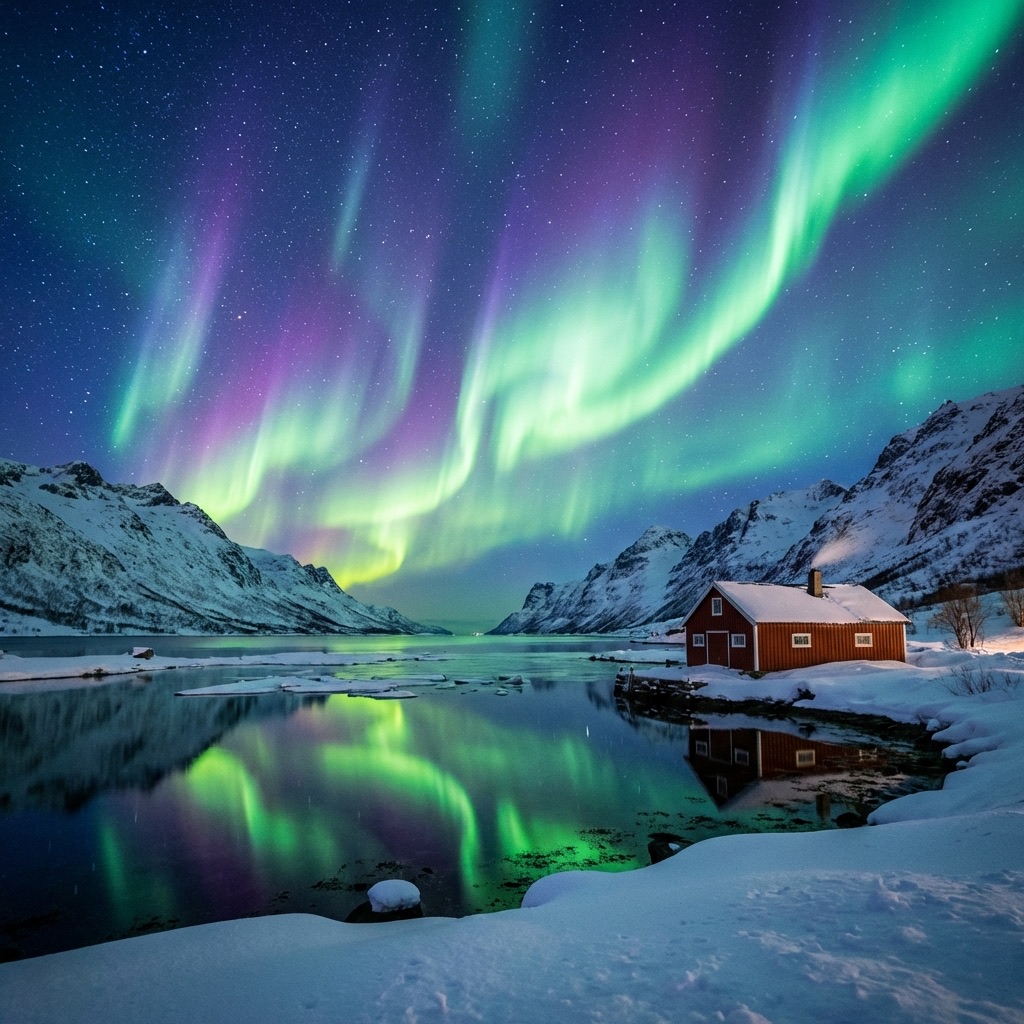
Northern Lights in Norway: 6 Arctic Escapes
The ultimate Norway aurora guide! 6 Arctic destinations—Tromsø, Lofoten, and Svalbard. Your expert guide to the 2026 northern lights.
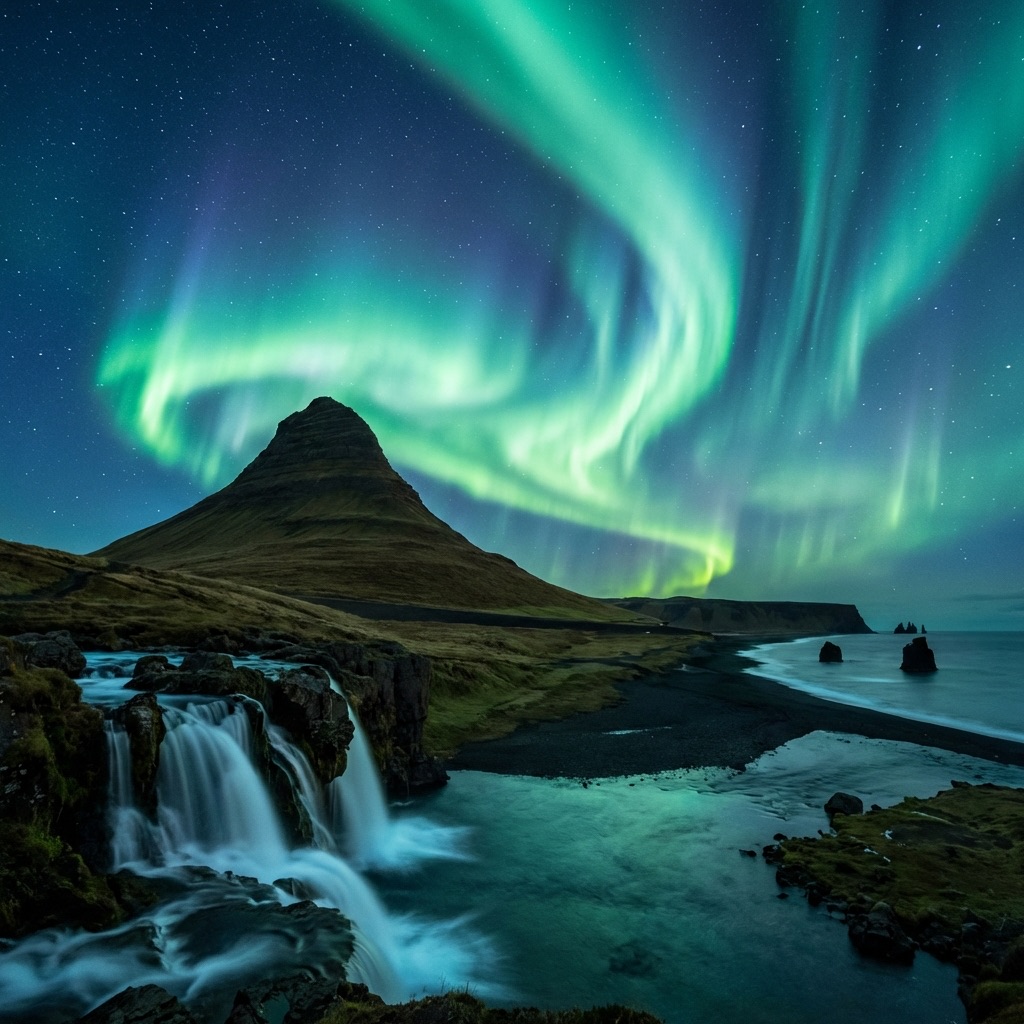
Northern Lights in Iceland: 6 Stunning Spots
Iceland is aurora heaven! 6 dark sky spots—Jökulsárlón, Kirkjufell, and more. Your guide to 2026 aurora tracking made easy.
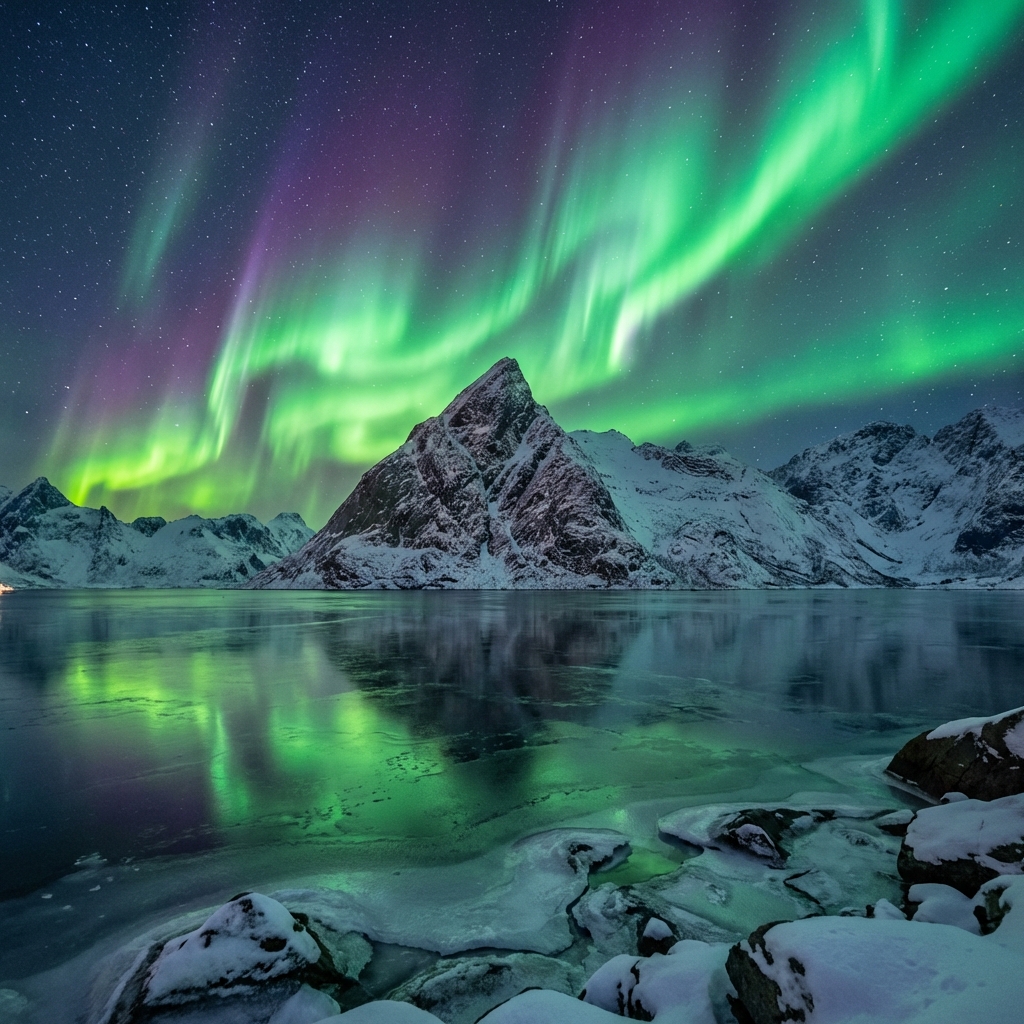
Best Places to See the Northern Lights: 2026 Guide
Discover the top global destinations for viewing the Aurora Borealis in 2026. From Norway to Alaska, find the best dark sky spots and essential gear.
End of Dossier • Research Complete