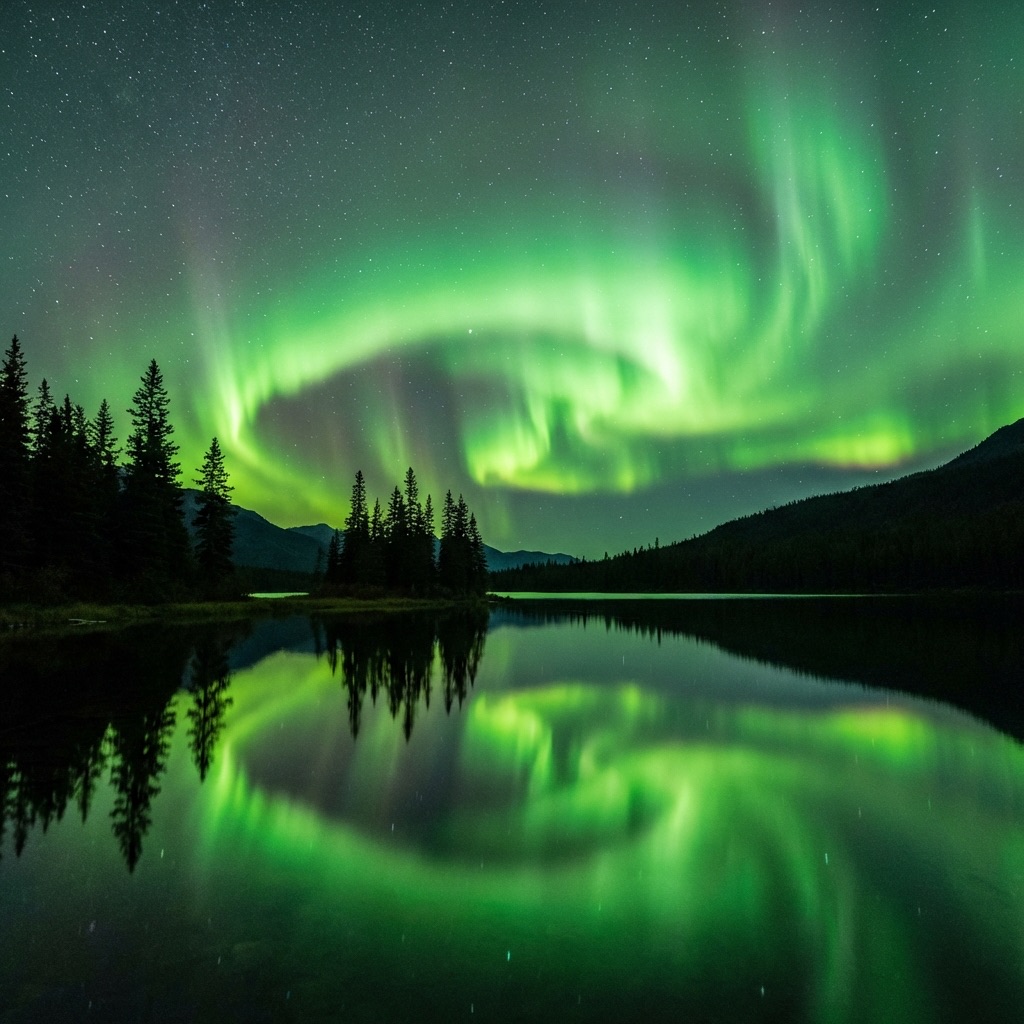
Aurora Hunting Guide: How to See the Northern & Southern Lights
Geomagnetic telemetry indicates we are currently navigating the peak-plateau of Solar Cycle 25. Aurora hunting in 2026 requires precise monitoring of the Kp index, Bz orientation, and solar wind velocity. This mission brief provides the technical framework for intercepting the Aurora Borealis and Australis, from ionospheric physics to long-exposure acquisition protocols.
DH Research Lab
Data & Editorial Board
Expert Tested Gear & Affiliate Disclosure
This guide contains affiliate links. As an Amazon Associate, we earn from qualifying purchases.
01Understanding Auroras
Auroras occur when charged particles from the Sun interact with Earth's magnetic field and atmosphere. The Sun constantly emits these particles in the "solar wind," but during solar storms (coronal mass ejections), billions of tons of plasma blast toward Earth.
When these particles hit our atmosphere, they excite oxygen and nitrogen atoms, causing them to glow:
- Green — Oxygen at 60-150 miles altitude (most common)
- Red — Oxygen above 150 miles
- Blue/Purple — Nitrogen at lower altitudes
- Pink — Nitrogen at the edge of curtains
The aurora forms an oval centered on the magnetic poles. Higher geomagnetic activity (measured by the Kp index) pushes this oval toward the equator, making auroras visible at lower latitudes.
Solar Cycle 25 Status
02The Kp Index Explained
The Kp index measures geomagnetic activity on a 0-9 scale. It's your most important metric for aurora forecasting.
| Kp | Activity | Where Visible |
|---|---|---|
| 0-1 | Quiet | Only far north (Svalbard, northern Alaska) |
| 2-3 | Unsettled | Northern Canada, Scandinavia |
| 4 | Active | Scotland, Iceland, northern US states |
| 5 | Minor Storm | Northern UK, central Canada, northern Germany |
| 6-7 | Moderate Storm | Pacific Northwest, New England, central Europe |
| 8-9 | Severe Storm | Southern US, Mediterranean — rare but spectacular! |
Pro tip: Our Dashboard shows real-time Kp index data so you can plan your hunts.
Kp 5+
Most reliable for mid-latitude viewing (40-55°N).
G-Scale
NOAA also uses G1-G5 for storms (G1 = Kp5, G5 = Kp9).
Timing
Auroras peak around midnight (magnetic midnight, ~10pm-2am local).
03Best Locations for Auroras
Northern Hemisphere (Aurora Borealis):
- Norway — Tromsø is the aurora capital; clear crisp nights December-March
- Iceland — Dark skies everywhere; combine with hot springs
- Finland — Glass igloos let you watch from bed
- Alaska — Fairbanks has 240+ aurora nights per year
- Canada — Yellowknife, Whitehorse, Churchill
Southern Hemisphere (Aurora Australis):
- Tasmania — Southern tip offers best mainland views
- New Zealand — Stewart Island and South Island's east coast
- Antarctica — Ultimate destination (cruise from Argentina)
Dark skies are essential. Use our Light Pollution Map to find spots away from cities.
Sony a7 IV
“Full-frame mirrorless with exceptional low-light autofocus.”
RATIONALE
The Eye AF works even in aurora conditions — critical for including people in your shots.
04Essential Aurora Hunting Gear
Beyond your camera, you need gear to survive hours in freezing conditions while staying comfortable and ready to shoot.
OCOOPA Hand Warmers (2-Pack)
“Rechargeable electric hand warmers — 14 hours of heat.”
RATIONALE
Essential for keeping fingers warm enough to operate camera controls. Lithium batteries work better than chemical warmers in extreme cold.
05Camera Settings for Aurora Photography
Auroras move fast, so settings differ from static Milky Way photography:
Base Settings:
- Aperture: f/2.8 or wider (f/1.4-f/2 ideal)
- Shutter Speed: 1-8 seconds (shorter captures movement)
- ISO: 1600-6400 depending on aurora brightness
- Focus: Manual, infinity (or a star)
- White Balance: 3500-4500K for natural colors
Active vs. Subtle Auroras:
- Subtle glow: 8-15 seconds, ISO 3200-6400
- Active curtains: 1-4 seconds, ISO 1600-3200
- Corona (overhead): 0.5-2 seconds, ISO 3200
Pro tip: Watch with your eyes first! Cameras see more than you do. A faint glow to your eyes might photograph as vibrant green.
Rokinon 14mm f/2.8
“Ultra-wide, fast lens perfect for aurora and astro.”
RATIONALE
Wide enough to capture the full aurora display, fast enough for short exposures.
06Apps & Resources for Aurora Forecasting
Essential Apps:
- My Aurora Forecast — Best overall app with notifications
- Aurora Alert — Good for North America
- SpaceWeatherLive — Detailed technical data
Websites:
- NOAA Space Weather Prediction Center — Official US forecasts
- Aurora Service — Great for Europe
- Our Dashboard — Real-time Kp index and local conditions
Social Media:
- Follow @TamithaSkov (Space Weather Woman) for forecasts
- Join regional aurora hunting Facebook groups for alerts
Set Alerts!
Frequently Asked Questions
Q:What is the best time of year to see the Northern Lights?
The best time is during the darker months from September to March, with peak activity around the equinoxes (late September and late March). You need dark skies, so summer months near the Arctic Circle have too much daylight.
Q:What does Kp index mean for aurora viewing?
The Kp index measures geomagnetic activity on a 0-9 scale. Kp 0-1 means auroras only visible in the far north. Kp 4-5 brings auroras to Scotland, Iceland, and northern US states. Kp 7+ is a major storm visible as far south as the Mediterranean.
Q:Where is the best place to see the Northern Lights?
Top destinations include Tromsø (Norway), Fairbanks (Alaska), Yellowknife (Canada), and Iceland. These locations are within the auroral zone and have reliable dark skies during winter months.
Q:Can you see the Northern Lights with your naked eye?
Yes, strong auroras are easily visible to the naked eye as dancing green, purple, or red lights. However, cameras capture more color and detail than eyes can see—a faint glow to your eyes may photograph as vibrant green.
Q:What camera settings for aurora photography?
Use a wide-angle lens at f/2.8 or wider, ISO 1600-6400, and shutter speeds of 1-8 seconds (faster for active curtains, slower for subtle glows). Focus manually on infinity and use a sturdy tripod.
Don't Forget Your Gear
Get our Dark Sky Preparation Checklist and never arrive at a remote site missing a critical piece of equipment again.
Join 2,400+ astronomers • No spam, strictly dark sky intel
Level Up Your Astronomy Skills
Get our premium PDF guides with hundreds of pages of expert advice, gear recommendations, and step-by-step tutorials.
Browse All GuidesFind Your Darkest Sky
Use our real-time satellite maps to find locations with zero light pollution.
Launch Interactive MapPlan Your Deployment
Ready to experience these dark skies yourself? Use our interactive map to find the best dark-sky certified hotels, desert cabins, and observatories near this location.
Booking through this map supports Darkest Hour's light pollution research.
Your Learning Roadmap
You've mastered the beginner basics. The next logical step in your technical progression is mastering intermediate acquisition.
MANDATORY FIELD EQUIPMENT
Celestron NexStar 8SE
The gold standard for deep-sky observation. 203mm aperture for maximum light gathering.
ZWO Seestar S50
Fully robotic imaging system. Perfect for urban environments and rapid deployment.
Peak Design Travel Tripod
Zero-latency stability for long exposure astrophotography. Carbon fiber construction.
Continue Your Research
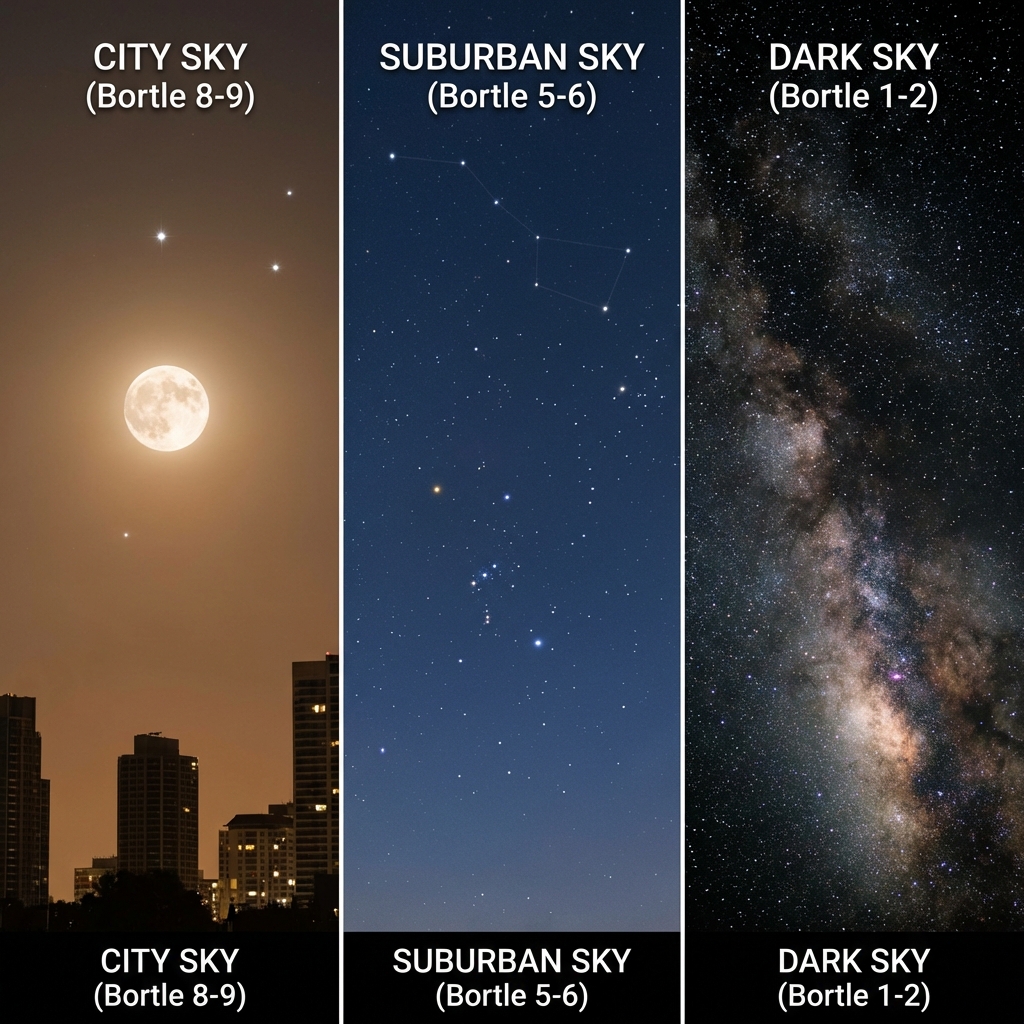
How to Read a Bortle Scale Map: The Dark Sky Cheat Code
Decode light pollution maps and understand Bortle classes 1 to 9. Use our advanced dark sky tools to find your perfect stargazing location tonight.
Stargazing with Kids: A Family Guide to the Night Sky
Create magical family memories with our guide to stargazing with kids. Includes age-appropriate activities, gear recommendations, and safety tips.
Your First Night Stargazing: Complete 2026 Guide
Everything you need for your first night under the stars. Learn to find dark sky locations, navigate constellations, and master stargazing with zero gear.
End of Dossier • Research Complete