Portland Stargazing: The Best Dark Sky Escapes
The artificial skyglow of Portland drowns out most celestial objects, leaving only the brightest planets visible. But just a few hours away, the true night sky emerges. Here is where local astronomers go to find the stars.
DH Research Lab
Data & Editorial Board
Expert Tested Gear & Affiliate Disclosure
This guide contains affiliate links. As an Amazon Associate, we earn from qualifying purchases.
01Understanding Local Light Pollution
Before heading out from Portland, always check the Bortle scale of your destination. The transition from the inner city (Bortle 8/9) to these locations represents a massive leap in visibility.
02The Oregon Outback Advantage
Oregon has recently made headlines for designating the 'Oregon Outback International Dark Sky Sanctuary', covering over 2.5 million acres of southeastern Oregon.
Rain Shadow Buffer: The Cascade Mountains act as a massive barrier to the moist, cloudy air of the coast and the light pollution of the Willamette Valley. High Desert Clarity: Once you cross the Cascades, the air becomes exceptionally dry, resulting in world-class 'transparency' for deep-sky observing. Statewide Commitment: Oregon has a growing network of dark sky parks and preserves, from the coast to the canyonlands.
Bortle Scale
031. Pine Mountain Observatory (Bend Area)
Distance from Portland: 3.5 hours | Bortle Class: 2-3 | Best For: Professional-grade public observing
Operated by the University of Oregon, Pine Mountain is a premier high-altitude observatory that welcomes the public.
Highlights:
- View through professional-grade telescopes during public nights.
- High elevation (6,300 ft) puts you above most of the atmosphere's haze.
- Dedicated primitive camping nearby for all-night sessions.
Note: Check the PMO website for seasonal opening dates and weather-dependent public nights.
Stay22 - Bend & Sunriver Stays
“Find dark-sky friendly stays in the Bend/Sunriver area.”
RATIONALE
Sunriver is a Dark Sky Community. Staying here allows you to observe from your balcony and be at the observatory in 40 minutes.
042. Alvord Desert (SE Oregon)
Distance from Portland: 7 hours | Bortle Class: 1 | Best For: The absolute darkest sky in the US
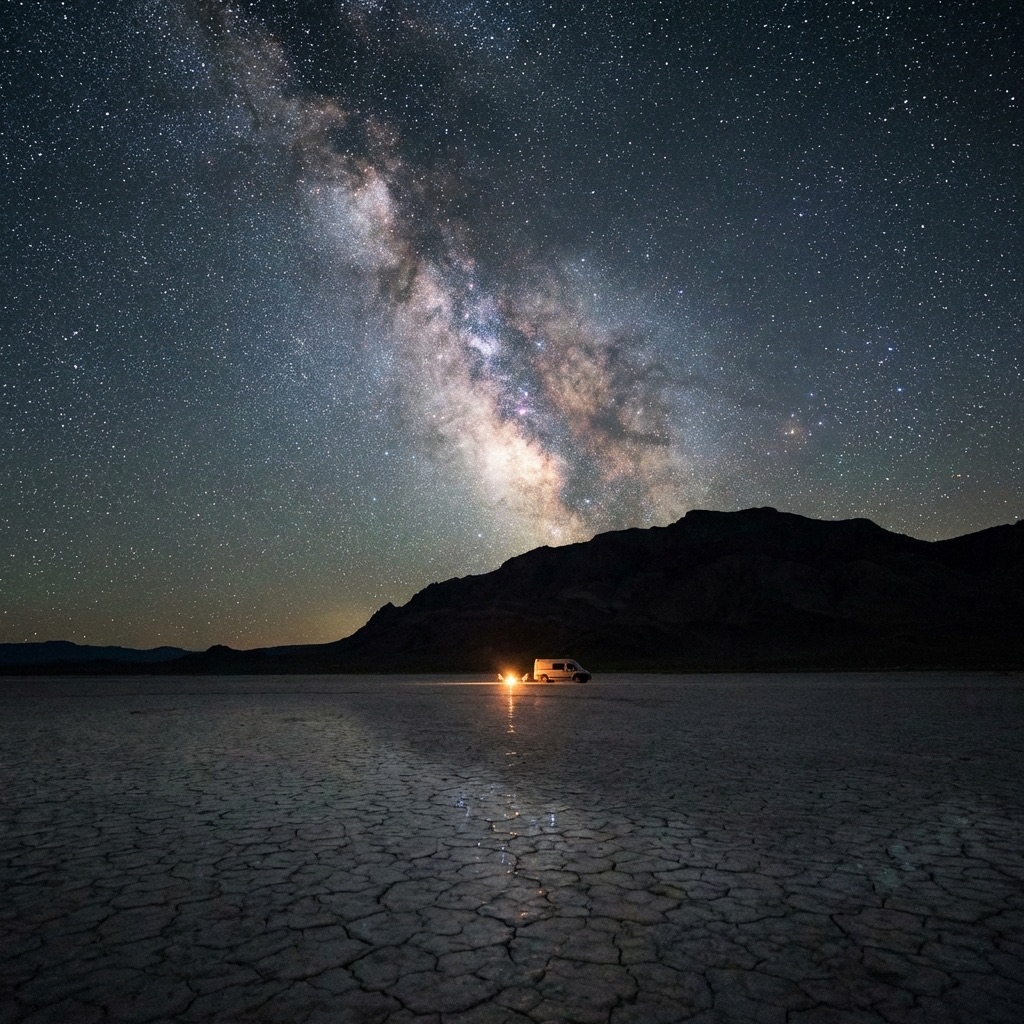
The Alvord Desert is a massive dry lake bed in the heart of the Oregon Outback. It is as close to total darkness as you can find in the contiguous US.
Why go:
- Imagine 360 degrees of unobstructed horizon with zero artificial light.
- The 'Steens Mountain' provides a dramatic backdrop for astrophotography.
- Camp directly on the playa and watch the Milky Way cast shadows on the ground.
Celestron SkyMaster 25x100 Binoculars
“Giant binoculars that act like two telescopes for immersive views.”
RATIONALE
In a Bortle 1 sky, these binoculars reveal the spiral arms of Andromeda and thousands of stars in the Hercules Cluster with incredible brightness.
053. Prineville Reservoir State Park
Distance from Portland: 3 hours | Bortle Class: 3 | Best For: Certified Dark Sky Park accessibility
Prineville Reservoir was the first state park in Oregon to receive International Dark Sky Park certification.
Highlights:
- Dedicated 'stargazing pads' for telescope setup.
- Frequent star parties and educational programs.
- Great water reflections for photography.
Shielded
The surrounding hills help block light from the town of Prineville.
Facilities
Excellent restrooms and camping facilities right at the viewing sites.
Reservations
Book your campsite early; this is a popular spot for Northwest astronomers.
064. LL Stub Stewart State Park
Distance from Portland: 45 mins | Bortle Class: 4-5 | Best For: Closest quality escape
Located in the Coast Range foothills, this is the most popular 'quick' escape for Portlanders.
What to expect:
- The 'Hilltop Day Use Area' is a sanctioned spot for evening observing.
- Strong community of local observers (Rose City Astronomers).
- Significant improvement over city skies, though some West Hills glow is visible.
Local Meetups
075. Silver Falls State Park
Distance from Portland: 1 hour 15 mins | Bortle Class: 4 | Best For: Waterfalls and stars
While famous for its 10 waterfalls, Silver Falls offers decent darkness once you are deep within the state park.
Highlights:
- High-elevation clearings offer good horizons.
- Great for wide-field photography over the forest canopy.
Forest Depth
Capture the stars through the canopy of ancient Douglas firs.
Cooler Air
Elevation and forest cover keep the night air crisp and clear.
Trail Safety
Don't hike the falls trails at night alone; stick to the clearings and picnic areas for stargazing.
086. Gold Beach & Southern Coast
Distance from Portland: 5 hours | Bortle Class: 3 | Best For: Ocean horizons and sea stacks
The southern Oregon coast is much darker than the north. Looking south over the Pacific offers a perfectly dark horizon for Milky Way season.
Sony Alpha a7R V
“Ultra-high resolution for the detailed textures of the Oregon landscape.”
RATIONALE
Capture the rugged sea stacks of the Oregon coast and the millions of stars in the Milky Way with professional-grade detail.
Don't Forget Your Gear
Get our Dark Sky Preparation Checklist and never arrive at a remote site missing a critical piece of equipment again.
Join 2,400+ astronomers • No spam, strictly dark sky intel
Level Up Your Astronomy Skills
Get our premium PDF guides with hundreds of pages of expert advice, gear recommendations, and step-by-step tutorials.
Browse All GuidesFind Your Darkest Sky
Use our real-time satellite maps to find locations with zero light pollution.
Launch Interactive MapPlan Your Deployment
Ready to experience these dark skies yourself? Use our interactive map to find the best dark-sky certified hotels, desert cabins, and observatories near this location.
Booking through this map supports Darkest Hour's light pollution research.
Your Learning Roadmap
You've mastered the destinations basics. The next logical step in your technical progression is mastering astrophotography workflows.
MANDATORY FIELD EQUIPMENT
Celestron NexStar 8SE
The gold standard for deep-sky observation. 203mm aperture for maximum light gathering.
ZWO Seestar S50
Fully robotic imaging system. Perfect for urban environments and rapid deployment.
Peak Design Travel Tripod
Zero-latency stability for long exposure astrophotography. Carbon fiber construction.
Continue Your Research
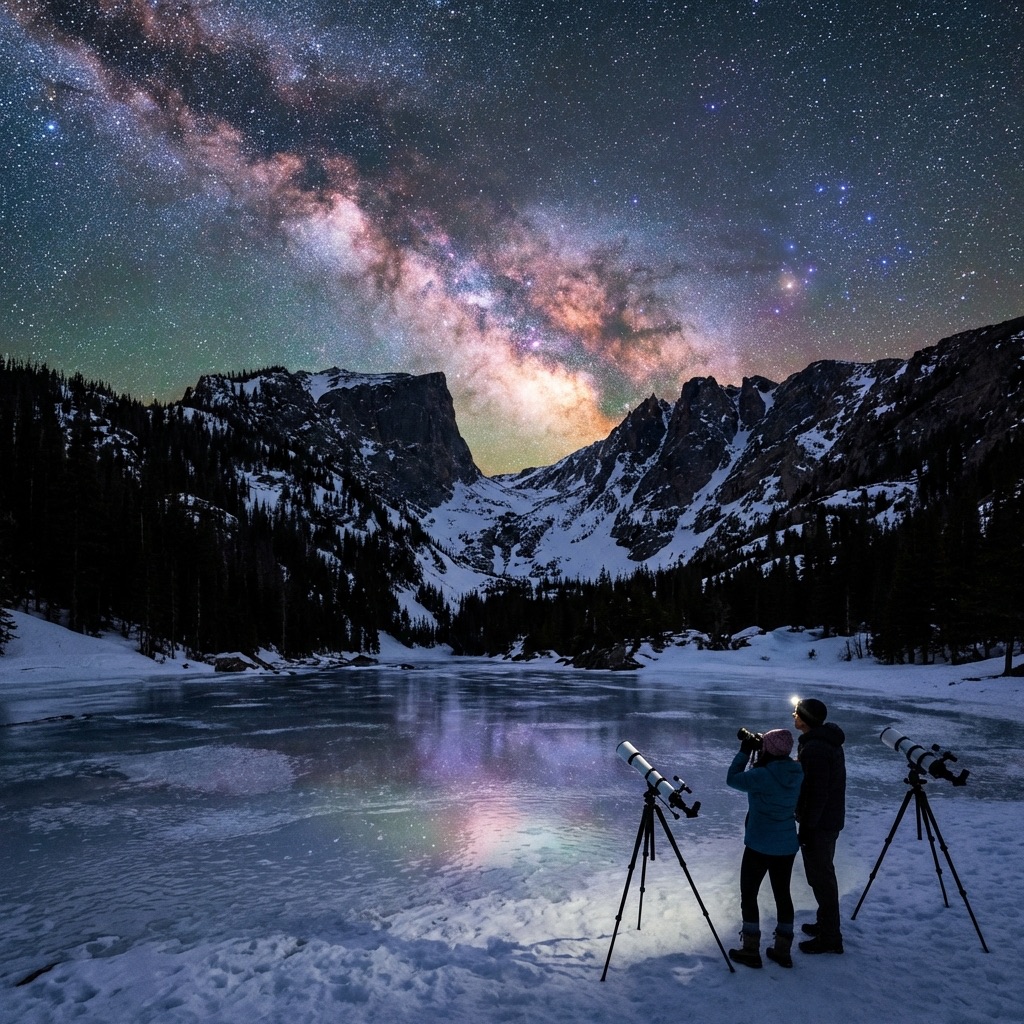
Best Stargazing Near Denver: 7 Colorado Dark Sky Escapes
High altitude and dark skies! 7 stunning Colorado spots within 3 hours of Denver—Rocky Mountain NP, Great Sand Dunes, and hidden alpine gems.
Best Stargazing Near Munich: 6 Alpine Dark Sky Escapes
Alpine stars await! 6 incredible dark sky spots near Munich—Berchtesgaden, Wendelstein, and the Austrian High Alps. Your guide to mountain stargazing.
Your First Night Stargazing: Complete 2026 Guide
Everything you need for your first night under the stars. Learn to find dark sky locations, navigate constellations, and master stargazing with zero gear.
End of Dossier • Research Complete