Best Stargazing in Banff: 6 Canadian Rockies Dark Sky Escapes (2026)
The Banff sector contains the highest-altitude dark-sky corridors in the Canadian Rockies, providing a critical window for high-transparency celestial acquisition. This guide maps the primary mission sites from the Icefields Parkway to the glacial voids of Lake Louise, focusing on maximizing signal integrity through vertical elevation.
DH Research Lab
Data & Editorial Board
Expert Tested Gear & Affiliate Disclosure
This guide contains affiliate links. As an Amazon Associate, we earn from qualifying purchases.
01The Rockies' Galactic Ceiling
Why Banff is a premier destination for astronomers:
Extreme Elevation: Many viewing spots are above 1,500m, putting you above much of the atmosphere's haze and humidity. The Icefields Parkway: This 230km stretch of road is almost entirely devoid of artificial light, connecting Banff with the Jasper Dark Sky Preserve. Northern Latitude: At 51°N, Banff is in a prime location for spotting the Northern Lights during periods of high solar activity.
Bortle Scale
021. Lake Minnewanka
Distance from Banff: 15 mins | Bortle Class: 3-4 | Best For: Closest high-quality darkness
Lake Minnewanka is a massive glacial lake just outside the Banff townsite. Its wide northern horizon makes it the premier spot for Aurora hunting near town.
Highlights:
- Unobstructed views to the North and East.
- Dramatic mountain silhouettes (Mt. Inglismaldie).
- Easy access and plenty of parking.
Image Tip: The Northern Lights dancing over the peaks of the Fairholme Range, reflected in the lake.
Stay22 - Banff & Lake Louise Stays
“Find lodge stays in the heart of the Rockies.”
RATIONALE
Staying at a lodge like the Fairmont Chateau Lake Louise or Num-Ti-Jah Lodge puts you directly under the dark skies without the drive.
032. Lake Louise & Moraine Lake
Bortle Class: 3 | Best For: Iconic peaks and turquoise water
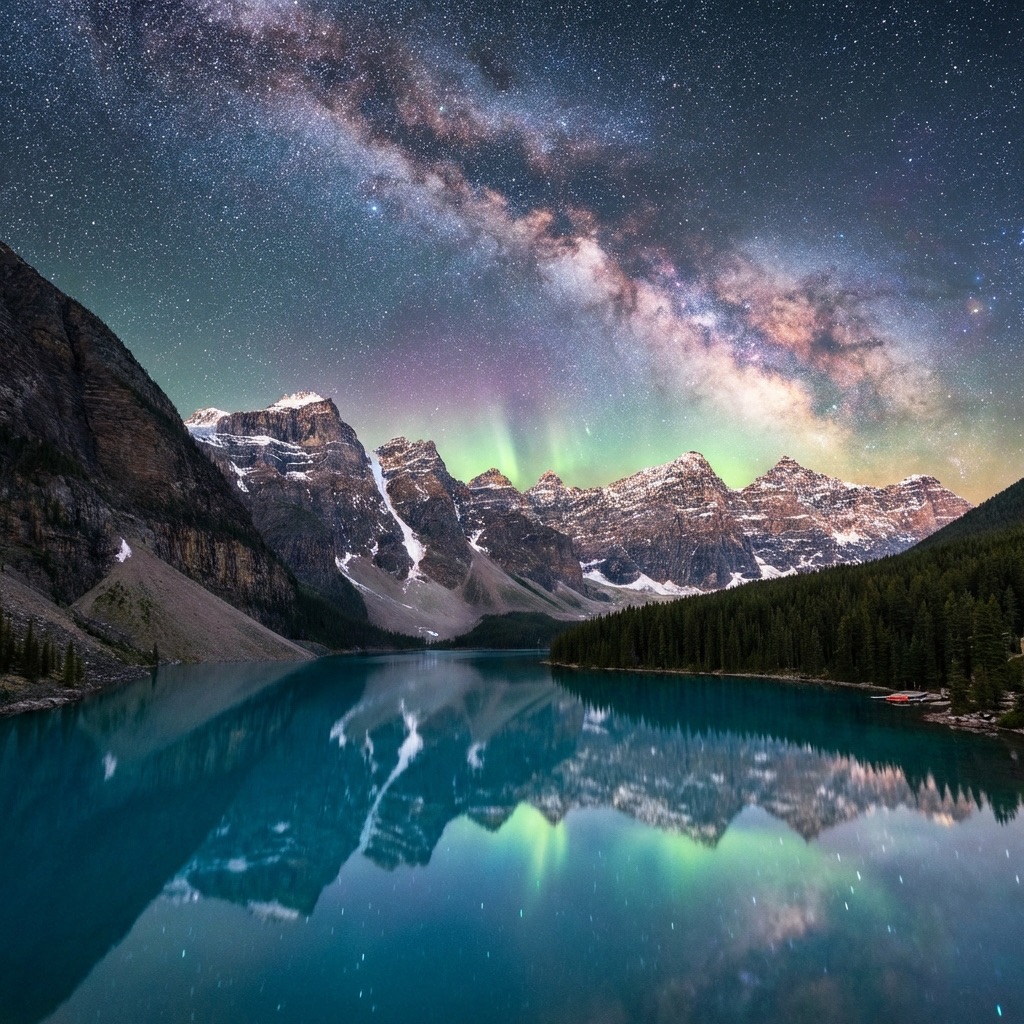
These are the most famous lakes in Canada for a reason. At night, the 'Valley of the Ten Peaks' at Moraine Lake is a spiritual experience.
Why go:
- Rockpile Viewpoint (Moraine Lake) — The classic '20 dollar bill' view under the Milky Way.
- Fairmont Boardwalk (Lake Louise) — Accessible and safe for beginners.
- High elevation ensures crisp, steady stars.
Nikon Monarch M7 10x42 Binoculars
“High-end, waterproof binoculars for the cold mountain air.”
RATIONALE
Perfect for scanning the star clusters of the summer Milky Way over the glaciers. Nitrogen-purged to prevent fogging in the cold.
043. Bow Lake (Icefields Parkway)
Distance from Banff: 1 hour | Bortle Class: 2 | Best For: Pristine wilderness darkness
Heading north onto the Icefields Parkway puts you in a different league of darkness. Bow Lake, with the Crowfoot Glacier, is a world-class site.
Highlights:
- ZERO light pollution from any direction.
- Perfectly still water often provides mirror reflections.
- The iconic red-roofed Num-Ti-Jah Lodge makes for a great foreground.
Icefields Shield
The surrounding massive peaks block any distant light from Red Deer or Calgary.
Transparency
At nearly 2,000m, the air is thin, dry, and exceptionally clear.
All-Night Pass
Parks Canada pass is required; make sure it's valid for your overnight session.
054. Peyto Lake (Bow Summit)
Elevation: 2,088m | Bortle Class: 2 | Best For: The highest easily-accessible viewing point
Bow Summit is the highest point on the Icefields Parkway accessible by car. The short hike to the Peyto Lake overlook offers incredible views of the stars.
Why go:
- See the famous 'Wolf-shaped' lake under the stars.
- Exceptionally high elevation for the cleanest possible air.
- Great for wide-field astrophotography of the Milky Way arch.
Wildlife Safety
065. Vermilion Lakes
Distance from Banff: 5 mins | Bortle Class: 4 | Best For: Mt. Rundle silhouettes and proximity
The most accessible spot from Banff town. The three lakes offer front-row seats to the iconic Mount Rundle.
Highlights:
- Accessible by bike or a short drive.
- Great for 'Short-trail' photography over the water.
- Visible light pollution from town, but still a significant upgrade for city-dwellers.
Mt. Rundle
The most photographed mountain in Banff looks spectacular under the stars.
Open Water
Warm springs often keep parts of the lake from freezing, even in early winter.
Accessibility
The docks provide stable, level platforms for tripod use.
076. Saskatchewan River Crossing
Distance from Banff: 1.5 hours | Bortle Class: 1-2 | Best For: Deepest wilderness and intersection of valleys
Where the North Saskatchewan, Mistaya, and Howse rivers meet. It's a vast, open area with huge horizons and absolute darkness.
Sony 14mm f/1.8 GM Lens
“Ultra-wide, ultra-fast lens for the Canadian Rockies.”
RATIONALE
Capture the entire sweep of the Milky Way from the peaks of the Valley of the Ten Peaks to the glaciers of the Icefields Parkway.
Frequently Asked Questions
Q:Is Banff good for stargazing?
Yes, Banff National Park is world-renowned for its stargazing. The high elevation (1,500m+), thin mountain air, and lack of humidity create exceptional transparency. While the town has some light pollution, the vast majority of the park consists of pristine Bortle 2 wilderness skies.
Q:Where is the best place in Banff to see the stars?
For absolute darkness, the Icefields Parkway is unbeatable, specifically Bow Lake and Peyto Lake. For accessibility near the townsite, Lake Minnewanka and Vermilion Lakes are excellent options with dramatic mountain silhouettes.
Q:Can I see the Northern Lights in Banff?
Yes! At 51 degrees north, Banff is well-positioned for aurora viewing. During periods of high solar activity (Kp 4+), the Northern Lights are frequently visible, appearing as green or purple glows above the northern mountain peaks.
Q:Is it safe to go stargazing in Banff at night because of bears?
Banff is active bear and cougar country. When stargazing, stay near your vehicle, make noise when moving, carry bear spray, and ideally go in a group. Lake Minnewanka and Peyto Lake are popular spots where you can stay relatively close to safe zones.
Q:Do I need a park pass for stargazing at night?
Yes, a valid Parks Canada Discovery Pass or Day Pass is required for all activities within the national park, including stopping at viewpoints or overnighting at campgrounds. Ensure your pass is clearly displayed on your vehicle's dashboard.
Don't Forget Your Gear
Get our Dark Sky Preparation Checklist and never arrive at a remote site missing a critical piece of equipment again.
Join 2,400+ astronomers • No spam, strictly dark sky intel
Level Up Your Astronomy Skills
Get our premium PDF guides with hundreds of pages of expert advice, gear recommendations, and step-by-step tutorials.
Browse All GuidesFind Your Darkest Sky
Use our real-time satellite maps to find locations with zero light pollution.
Launch Interactive MapPlan Your Deployment
Ready to experience these dark skies yourself? Use our interactive map to find the best dark-sky certified hotels, desert cabins, and observatories near this location.
Booking through this map supports Darkest Hour's light pollution research.
Your Learning Roadmap
You've mastered the travel basics. The next logical step in your technical progression is mastering astrophotography workflows.
MANDATORY FIELD EQUIPMENT
Celestron NexStar 8SE
The gold standard for deep-sky observation. 203mm aperture for maximum light gathering.
ZWO Seestar S50
Fully robotic imaging system. Perfect for urban environments and rapid deployment.
Peak Design Travel Tripod
Zero-latency stability for long exposure astrophotography. Carbon fiber construction.
Continue Your Research
Stargazing Near Sydney: 6 NSW Dark Sky Escapes
Escape the city lights! 6 incredible NSW dark sky spots near Sydney—Warrumbungle, Blue Mountains, and Mudgee. Southern Hemisphere stars at their best.
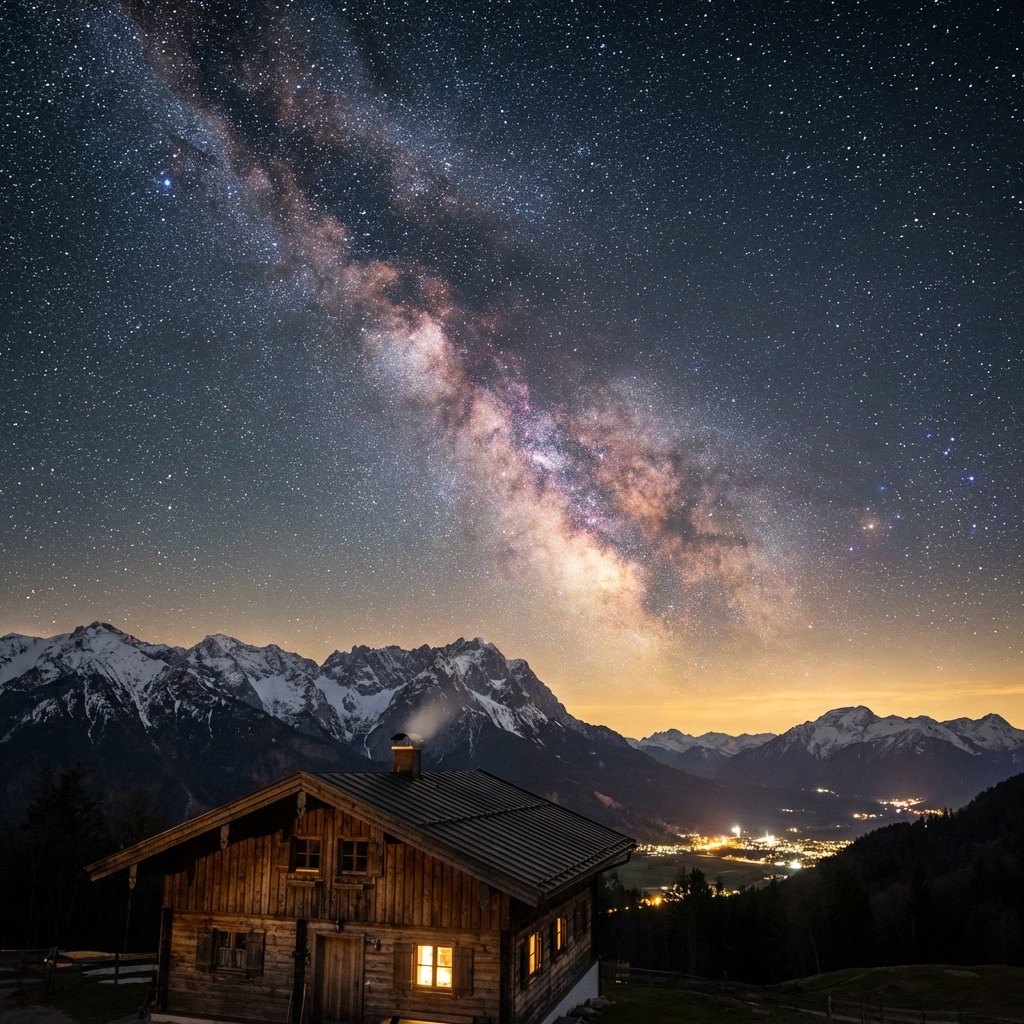
Best Stargazing Near Munich: 6 Alpine Dark Sky Escapes
Alpine stars await! 6 incredible dark sky spots near Munich—Berchtesgaden, Wendelstein, and the Austrian High Alps. Your guide to mountain stargazing.
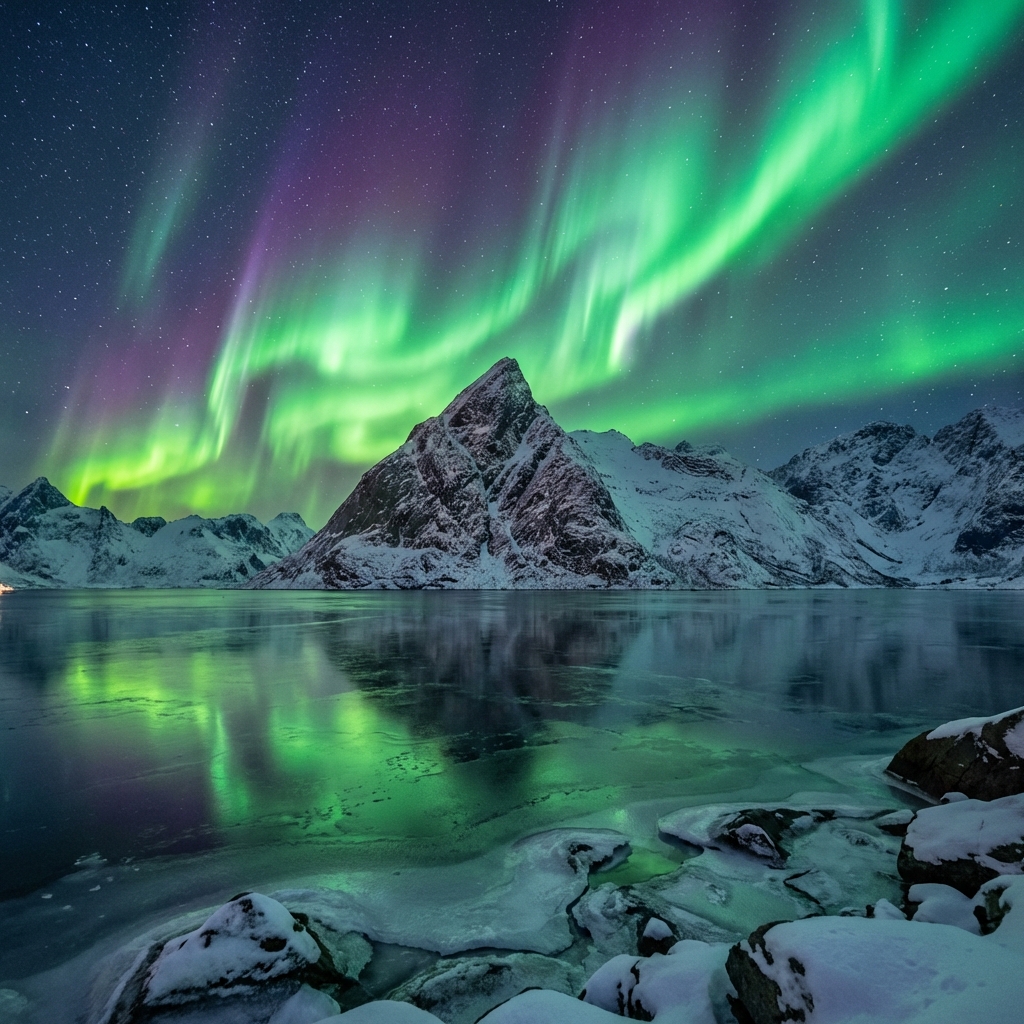
Best Places to See the Northern Lights: 2026 Guide
Discover the top global destinations for viewing the Aurora Borealis in 2026. From Norway to Alaska, find the best dark sky spots and essential gear.
End of Dossier • Research Complete