Best Stargazing in the Dolomites: 6 Italian Alpine Dark Sky Spots (2026)
The Dolomites are a UNESCO World Heritage site for a reason. Their sheer limestone walls, known as 'Pale Mountains', reflect starlight with a unique brilliance. Because many of the high plateaus are accessible only by cable car or long hikes, they remain islands of darkness in a developed Europe. From the iconic three peaks of Tre Cime to the vast meadows of Alpe di Siusi, here are 6 locations to experience the night sky in the Dolomites.
DH Research Lab
Data & Editorial Board
Expert Tested Gear & Affiliate Disclosure
This guide contains affiliate links. As an Amazon Associate, we earn from qualifying purchases.
01The Pale Mountains at Night
What makes the Dolomites special for astronomers:
Rock Reflectivity: The dolomite limestone has a high albedo, making the mountains glow under even the faintest starlight or moonlight. High Elevation: Many viewing spots are above 2,000m, providing the stability and transparency needed for high-resolution observing. Inversion Protection: Frequent valley mists trap the light pollution of Bolzano and Belluno, leaving the peaks in pristine darkness.
Bortle Scale
021. Tre Cime di Lavaredo (Drei Zinnen)
Elevation: 2,348m (Rifugio Locatelli) | Bortle Class: 2-3 | Best For: Most iconic mountain silhouettes
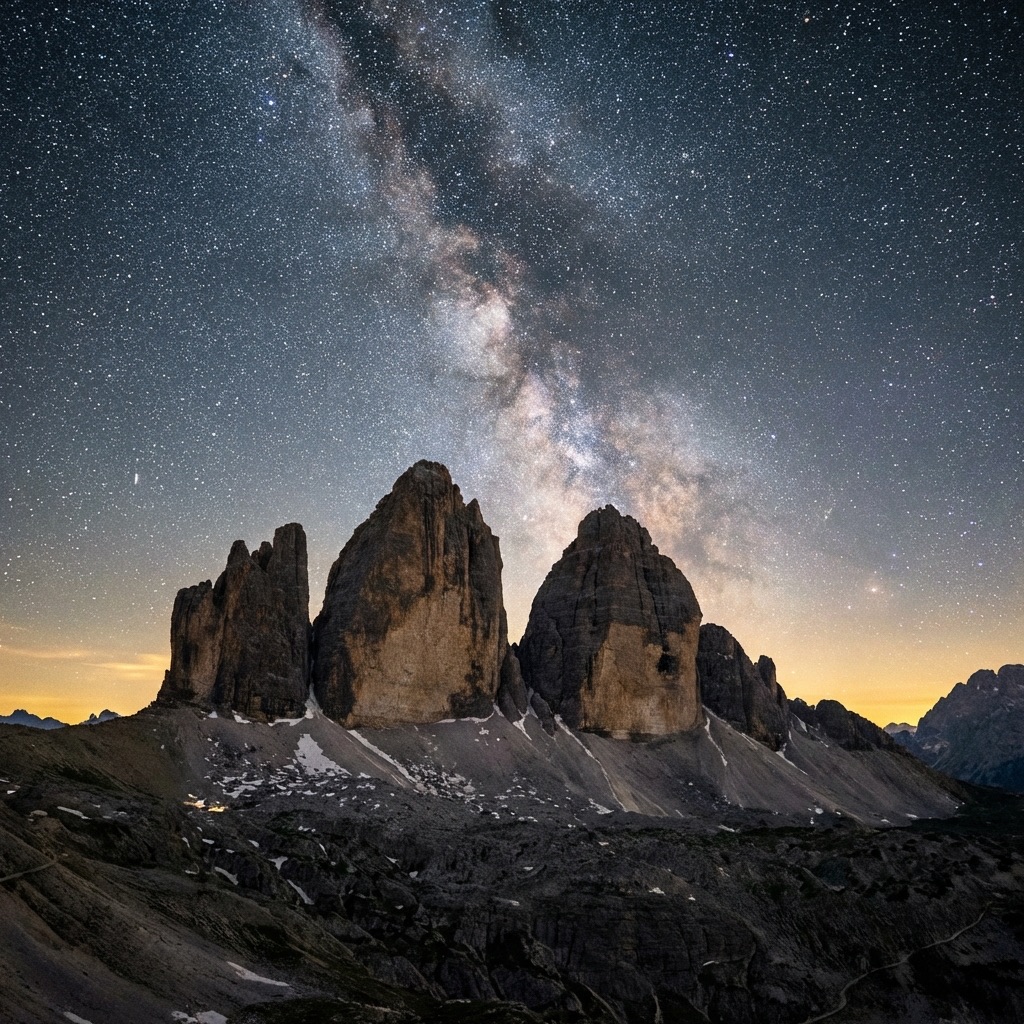
Tre Cime is the cathedral of the Dolomites. The view of the three massive'fingers' of rock under the Milky Way is the holy grail for European astrophotographers.
Highlights:
- Rifugio Locatelli (Dreizinnenhütte) — The premier vantage point.
- Paterno Mountain — Provides a dramatic frame for the peaks.
- High elevation ensures world-class clarity.
Image Tip: The Milky Way arcing between the three peaks, captured from the small caves nearby.
Stay22 - Tre Cime Rifugios
“Book stays at high-altitude mountain huts.”
RATIONALE
Staying at a 'Rifugio' is the secret. You step out of your door and you are already at 2,300m in the heart of the darkness.
032. Alpe di Siusi (Seiser Alm)
Elevation: 1,800m - 2,200m | Bortle Class: 3 | Best For: Wide rolling meadows and mountain backdrops
Europe's largest high-altitude meadow offers an expansive view of the sky with the Sassolungo and Sciliar mountains as a backdrop.
Why go:
- Unobstructed 360-degree horizons.
- Beautiful alpine huts (Baita) that serve as perfect foreground subjects.
- Easy walking terrain compared to the rugged Tre Cime.
Bushnell Legend L-Series 10x42 Binoculars
“Rugged binoculars for mountain use.”
RATIONALE
Perfect for scanning the deep star fields of the Milky Way while waiting for the 'Alpenglow' to fade into the 'Star-glow'.
043. Passo Giau
Elevation: 2,236m | Bortle Class: 3 | Best For: Accessible high-altitude 360 views
One of the most scenic passes in the Dolomites, reachable by car. It offers a stunning view of the Ra Gusela peak.
Highlights:
- Reachable year-round (check for winter snow closures).
- Minimal local light pollution.
- The isolated peak of Ra Gusela creates a sharp, dramatic silhouette against the stars.
Easy Access
Drive right to the summit of the pass for instant dark sky access.
Transparency
At 2,200m, you are far above the hazy valley air.
Winter Stars
One of the best spots for winter astrophotography if the pass is open.
054. Lake Braies (Pragser Wildsee)
Elevation: 1,496m | Bortle Class: 4 | Best For: Water reflections and emerald shores
The 'Pearl of the Dolomite Lakes'. The steep mountains surrounding the lake provide excellent screening from distant light domes.
Why go:
- Perfect mirror reflections of the stars in the still lake water.
- The iconic wooden boat house is a classic foreground subject.
- Very popular; visit on a weeknight for a quieter experience.
Still Water
065. Seceda Ridge
Elevation: 2,519m | Bortle Class: 2 | Best For: Sharp, jagged ridgelines
The sheer, slanted face of the Odle/Geisler group is unlike anything else in the world. Accessible by cable car from Ortisei (check night operation/events).
Highlights:
- One of the highest easily-accessible viewing points.
- The distinctive 'knife-edge' ridge creates a surreal perspective under the stars.
- Total isolation from the lights of the Val Gardena below.
Zodiacal Light
From this elevation, the Zodiacal Light is often clearly visible during the spring and autumn.
Sunset Combo
The Seceda sunset is world-famous; stay for the transition into deep night.
High Winds
The ridge is exposed. Bring windproof gear and a sturdy tripod.
076. Passo Sella
Elevation: 2,240m | Bortle Class: 3 | Best For: Close-up views of the Sassolungo
Passo Sella sits between the Sassolungo and the Sella Massif. It offers some of the most 'intimate' mountain views under the stars.
Sony Alpha a7 IV
“The best all-round camera for mountain landscape and stars.”
RATIONALE
The a7 IV has the low-light performance and weather sealing required for the unpredictable weather of the Dolomites.
Frequently Asked Questions
Q:Is the Dolomites good for stargazing?
Yes, the Dolomites offer some of the best stargazing in Central Europe. The high altitude (often above 2,000m), low humidity, and the shielding effect of the mountains from the light pollution of Italian cities create exceptionally clear and dark skies, especially on the high plateaus and near remote refugios.
Q:When is the best time to see the Milky Way in the Dolomites?
The 'Milky Way season' in the Northern Hemisphere runs from late March to September. During this time, the bright galactic center is visible above the horizon. July and August are popular due to warmer temperatures, but the clearer air of May and June often provides even better transparency.
Q:Do I need to hike to see the stars in the Dolomites?
Not necessarily. Many high mountain passes like Passo Giau and Passo Sella are reachable by car and offer incredible Bortle 3 skies right from the parking area. However, hiking to high-altitude refugios (huts) like Rifugio Locatelli will get you away from all local light and provide the most iconic mountain silhouettes.
Q:Is it safe to stargaze in the Dolomites at night?
Yes, but you must be prepared for alpine conditions. Temperatures can drop below freezing even in summer, and weather can change rapidly. If you are hiking at night, stay on marked trails, use a high-quality headlamp with a red-light mode, and always check the local weather forecast before heading out.
Q:Where can I stay for the best stargazing experience?
Staying at a 'Rifugio' (mountain hut) is the ultimate experience. These huts are located high in the mountains and let you step straight into a dark-sky environment. Popular options for stargazers include Rifugio Locatelli (Tre Cime), Rifugio Lagazuoi, and various huts on the Alpe di Siusi.
Don't Forget Your Gear
Get our Dark Sky Preparation Checklist and never arrive at a remote site missing a critical piece of equipment again.
Join 2,400+ astronomers • No spam, strictly dark sky intel
Level Up Your Astronomy Skills
Get our premium PDF guides with hundreds of pages of expert advice, gear recommendations, and step-by-step tutorials.
Browse All GuidesFind Your Darkest Sky
Use our real-time satellite maps to find locations with zero light pollution.
Launch Interactive MapPlan Your Deployment
Ready to experience these dark skies yourself? Use our interactive map to find the best dark-sky certified hotels, desert cabins, and observatories near this location.
Booking through this map supports Darkest Hour's light pollution research.
Your Learning Roadmap
You've mastered the travel basics. The next logical step in your technical progression is mastering astrophotography workflows.
MANDATORY FIELD EQUIPMENT
Celestron NexStar 8SE
The gold standard for deep-sky observation. 203mm aperture for maximum light gathering.
ZWO Seestar S50
Fully robotic imaging system. Perfect for urban environments and rapid deployment.
Peak Design Travel Tripod
Zero-latency stability for long exposure astrophotography. Carbon fiber construction.
Continue Your Research
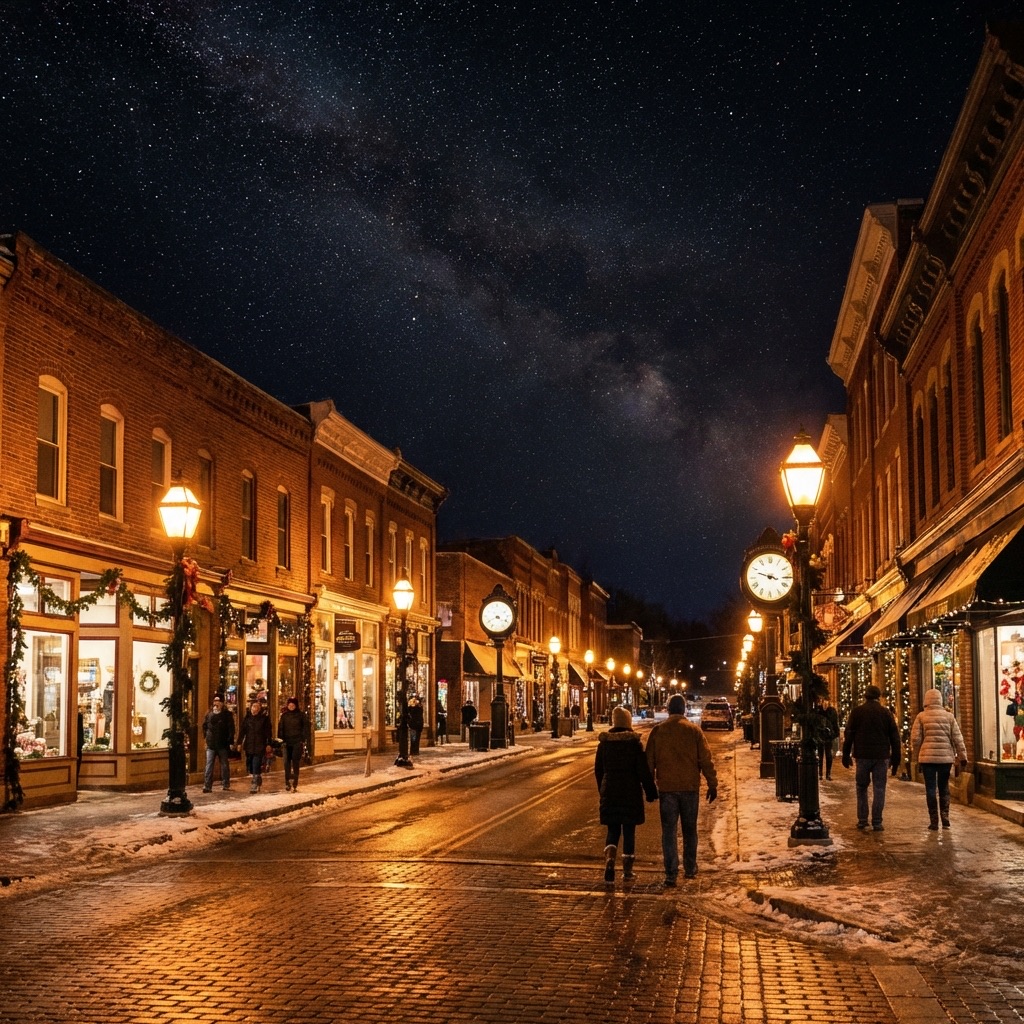
Light Pollution-Free Towns: Escape to the Darkest Skies
Visit the world's best Dark Sky Communities. Discover towns like Torrey and Westcliffe that offer pristine stargazing from your front porch.
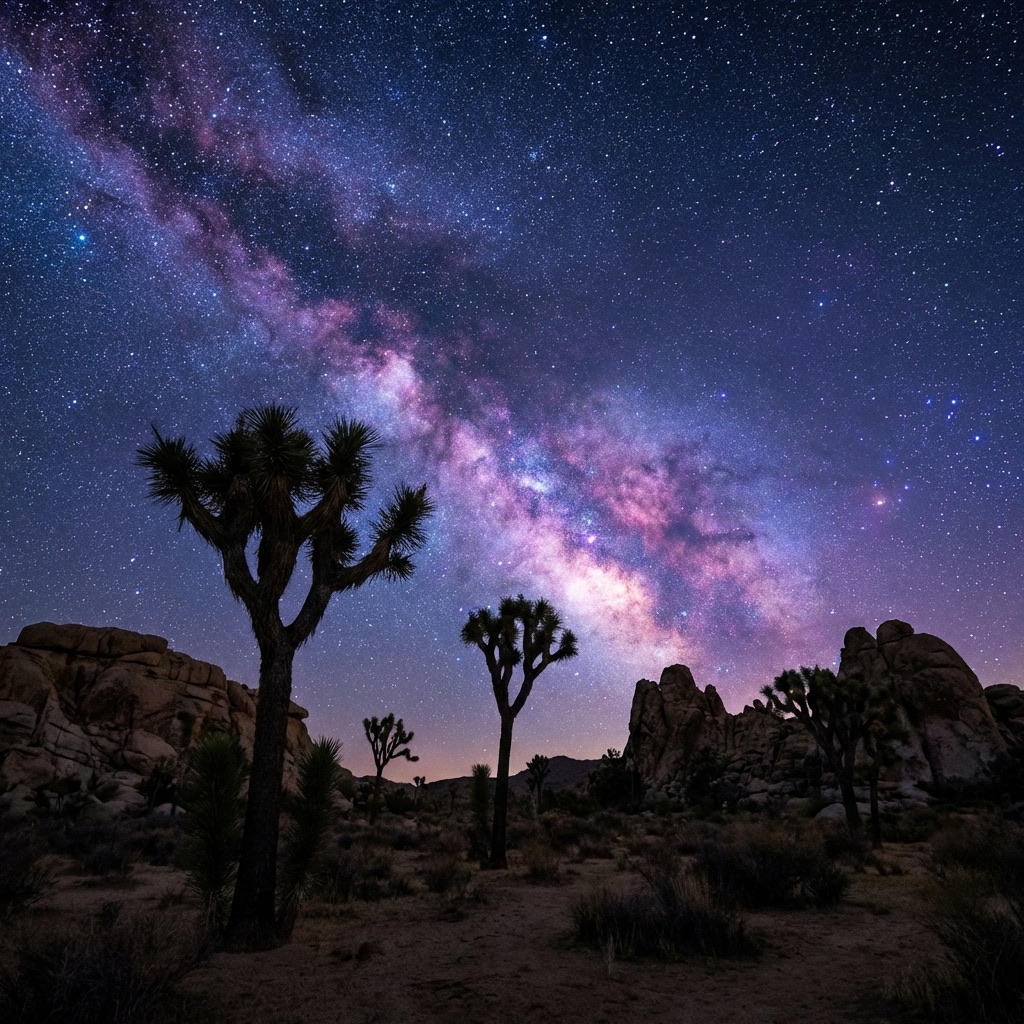
Best Stargazing Near Los Angeles: 7 Dark Sky Escapes
Escape LA's light pollution! 7 stunning dark sky spots within 3 hours—Joshua Tree, Death Valley, Anza-Borrego, and more. Essential Bortle ratings included.
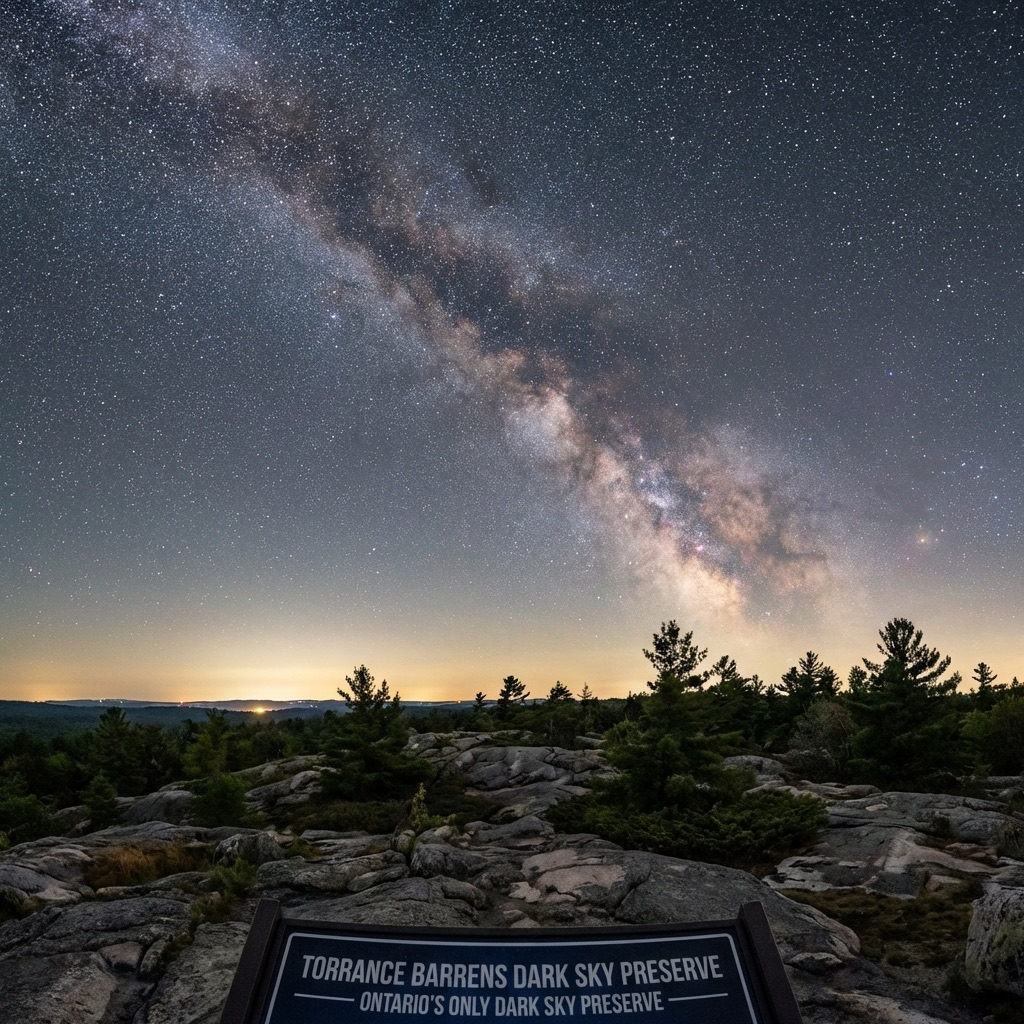
Best Stargazing Near Toronto: 6 Ontario Dark Sky Escapes
Escape the GTA light dome! 6 stunning Ontario dark sky spots—Torrance Barrens, Bruce Peninsula, and Algonquin. Find true darkness in Ontario.
End of Dossier • Research Complete